How do you build a whole new design universe from scratch?
In this episode of The Sociable Kitchen® Podcast, host Julie Broberg sits down with Christian Milán, Product Manager for Kvik Living, to talk about how the concept came to life — from defining the vision to collaborating with Danish designers and creating furniture and lighting that extend Kvik’s design DNA beyond the kitchen.
Christian shares what it takes to make designs that feel unmistakably Kvik — from soft materials and hidden features to the kind of quality that lasts for decades. He also gives us a peek behind the scenes of the creative process, what it’s like to work with designers like Hans Thyge & Co, and what’s inspiring him right now.
Kvik Living is Danish design made for the whole home — and this is the story of how it began.
This page is a transcript of the episode.
Danish design — Kvik Living
Welcome to The Sociable Kitchen, a podcast by Kvik.I'm Julie Broberg. Today, I've invited my colleague, Christian Milán, our product manager for Kvik Living, into the studio to have a chat with us about this new category.
Kvik Living is a new series of furniture, lighting, and accessories that all take as their starting point something that we're experts in, the kitchen. Christian was brought on board at Kvik to start up and shape this new offering. But let's let him tell that story.
It actually took it quite some time before we called it Kvik Living
Christian: Yes, I was brought on board, so of course, uh, there were some ideas before me. So there was, there was like a vision of wanting to create something new that Kvik had done really well and become a strong concept, but also an ambition to become something more.
The management set out to, to find someone who could perhaps take care of this journey, think of something new that we could put our efforts in. Of course, it's not like that I invented it, but I was brought on board to try and develop it. Basically, the first task was to define the ambition. Honestly, it's still evolving, so it's still something that we are working upon, constantly trying to shape the idea, the vision of when you look five or 10 years ahead, what is it actually that we are imagining?
Yeah, of course, Kvik is known for making kitchens and bath and wardrobe as a- Yes ... a, a little bit, but- There are, of course, the very basics in just saying, "Okay, now we wanna extend categories," saying, "Okay, now we wanna develop furniture. Now we wanna develop lighting." But trying to imagine how this kind of universe would look like is a completely different thing, and it's very hard just to describe by words.
Some of the vision is easily written down, but you also really need to have a lot of talks, a lot of images, a lot of mood boards saying something about, "Okay, this is what we actually imagine. Is it big? Is it small? Is it colourful? Is it wild? Is it harmless? What is it?" So it has a lot of faces.
That actually took quite some time before we called it Kvik Living. Of course, we used the word or term living a lot of times, but naming it Kvik Living sounds like a small thing, but I think a very wise thing to do. It made it easier to talk about, for instance, when we talked about categories and sometimes they overlap with already existing categories.
For instance, accessories. You find a lot of accessories in the kitchen already, and now if you wanna talk about new accessories, how do they differentiate for the, from the existing ones? And naming it Kvik Living gave us a tool for saying, "Okay, these are the products that belongs to this universe."
The first thing in working with Kvik Living was setting some kind of guidelines on a approach to the whole area of Kvik Living, and one of these things being, okay, we, we have a parameter called Danish design. We need to live up to this argument, saying, "Okay, these are... It's one of the important things."
We are Kvik, and we are proud of our price positioning, we are proud of Danish design, and we are a kitchen brand, so how do we make sure that these parameters are also found in this new category? Of course, we also, yeah, had an approach naming some bullets, saying these we need to strive to have in our product development.
Yeah. What were some of the bullets, just as an example? For instance, it's, of course, Danish design. Just Danish design. Yeah. Surprisingly low prices. Okay. Uh, but it's also a thing about being as close as possible to the kitchen. It's about trying to create a, a synergy with our current assortment in terms of mood and tone, also basics in terms of materials, chosen materials, functions, sizes, and such.
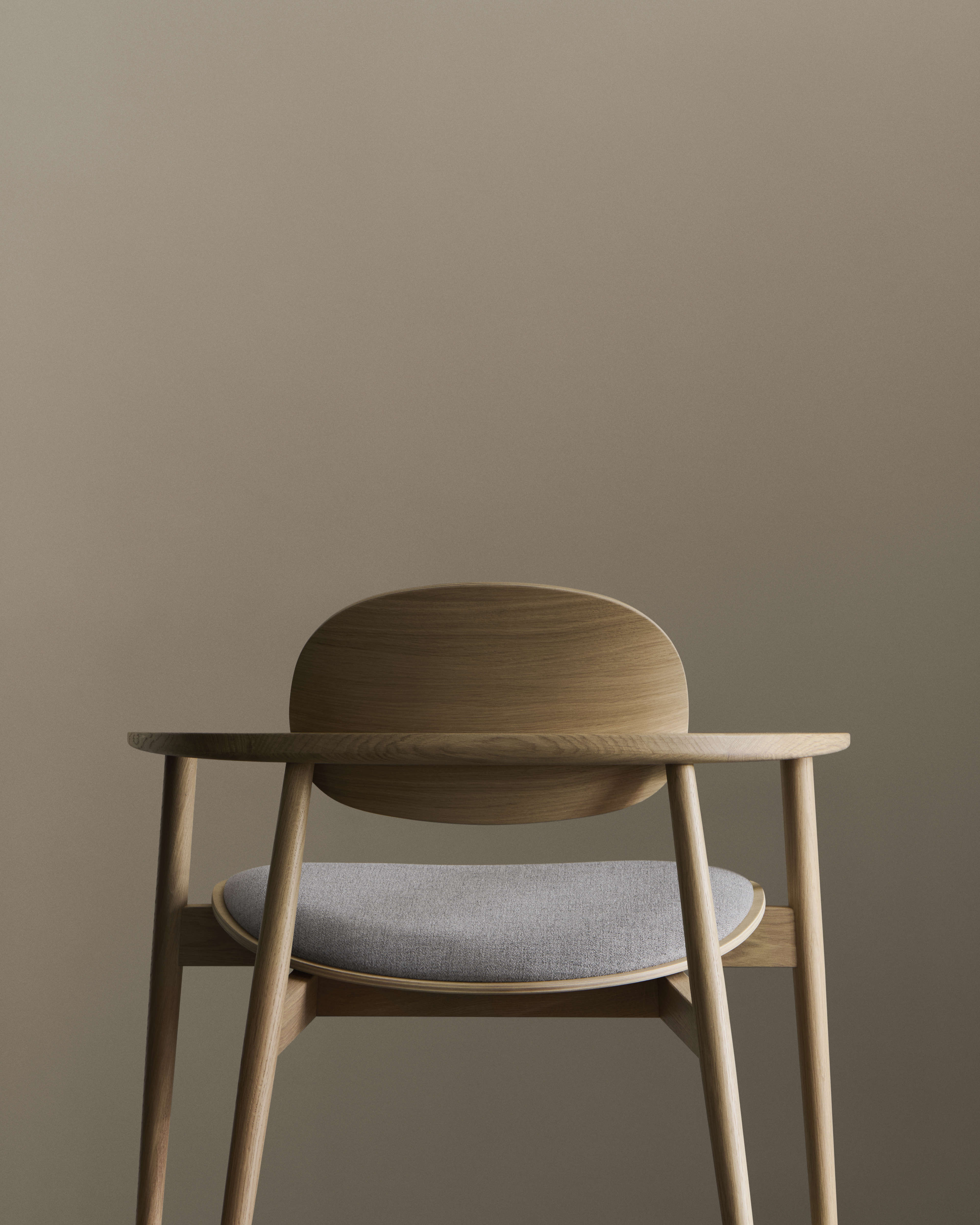
Design collaboration depends on trust
Julie: So how do you try to build bridge to the other category? How do you try to create synergy? Very important. Once the approach for Kvik Living was clear, the next step was finding the right people to bring it to life, the Danish designers who could translate that idea into beautiful, practical pieces that feel unmistakably Kvik. And as Christian explains, that kind of collaboration depends on more than just talent.
Christian: It depends on trust. I would say in many ways, for my part, building somewhat of a friendship also. You need to be able to understand each other thoroughly to put out difficult arguments, talking about very difficult or incomprehensible subjects.
You need to know each other quite well so that you do not get each other wrong or offend each other or talking about design, say, "Oh, can you change it a bit? I don't really like it all." Yes, you need to understand. We need to understand each other's style and, and, and ambitions, of course, also.
Julie: Do you do that by spending time together?
Christian: Yeah, definitely. It's not just a bunch of emails back and forth. No, it's also, of course, a lot on the phone, but also physical meetings. So for instance, a designer like Hans, I basically phoned them and said, "Hey, can I stop by?" And kicking in some doors saying, "Hi, I'm Christian, I wanna talk to you." And- Yeah ... I have some ideas, and listen to me for a while, and let's see how you react. Then talking more and more. When you work closely with designers, you start to recognise that moment when an idea just clicks, when it feels right, but it doesn't always happen in the same way.
It's very different from product to product. Some take a lot of time, being a hard nut to crack. Some has some technical challenges that are not necessarily that interesting from a design perspective. Others have perhaps some work to be done in trying to, to shape the right design, but let me give some examples here instead.
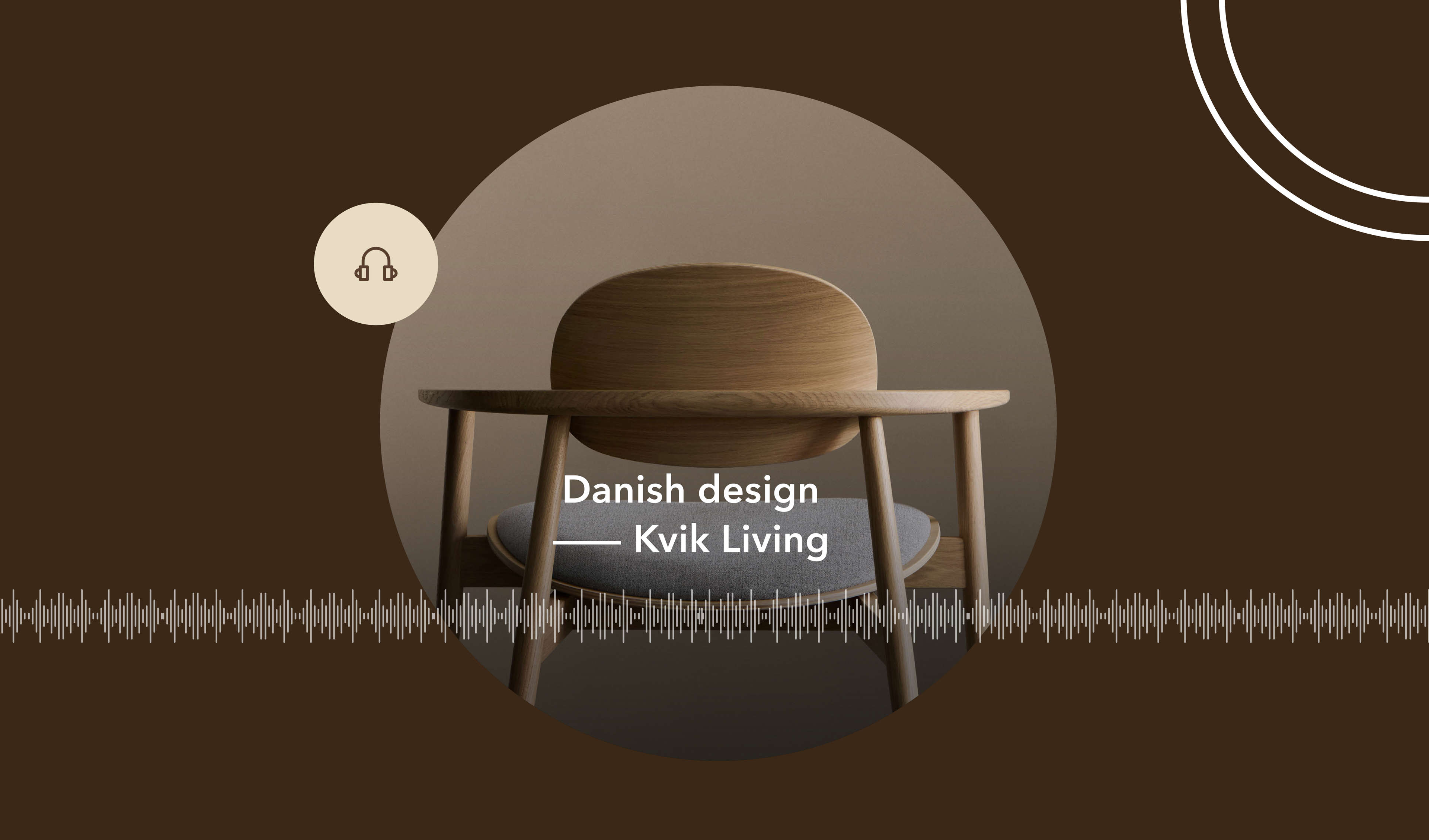
For instance, the lounge chair, I believe, was in many ways love at first sight. It was very fulfilled from the very beginning, and so there was not that much of a question in terms of, of changing anything in the visuals. There was a lot of work have to be done afterwards in achieving that design in terms of techniques and construction, but the whole expression was there from the very first sight.
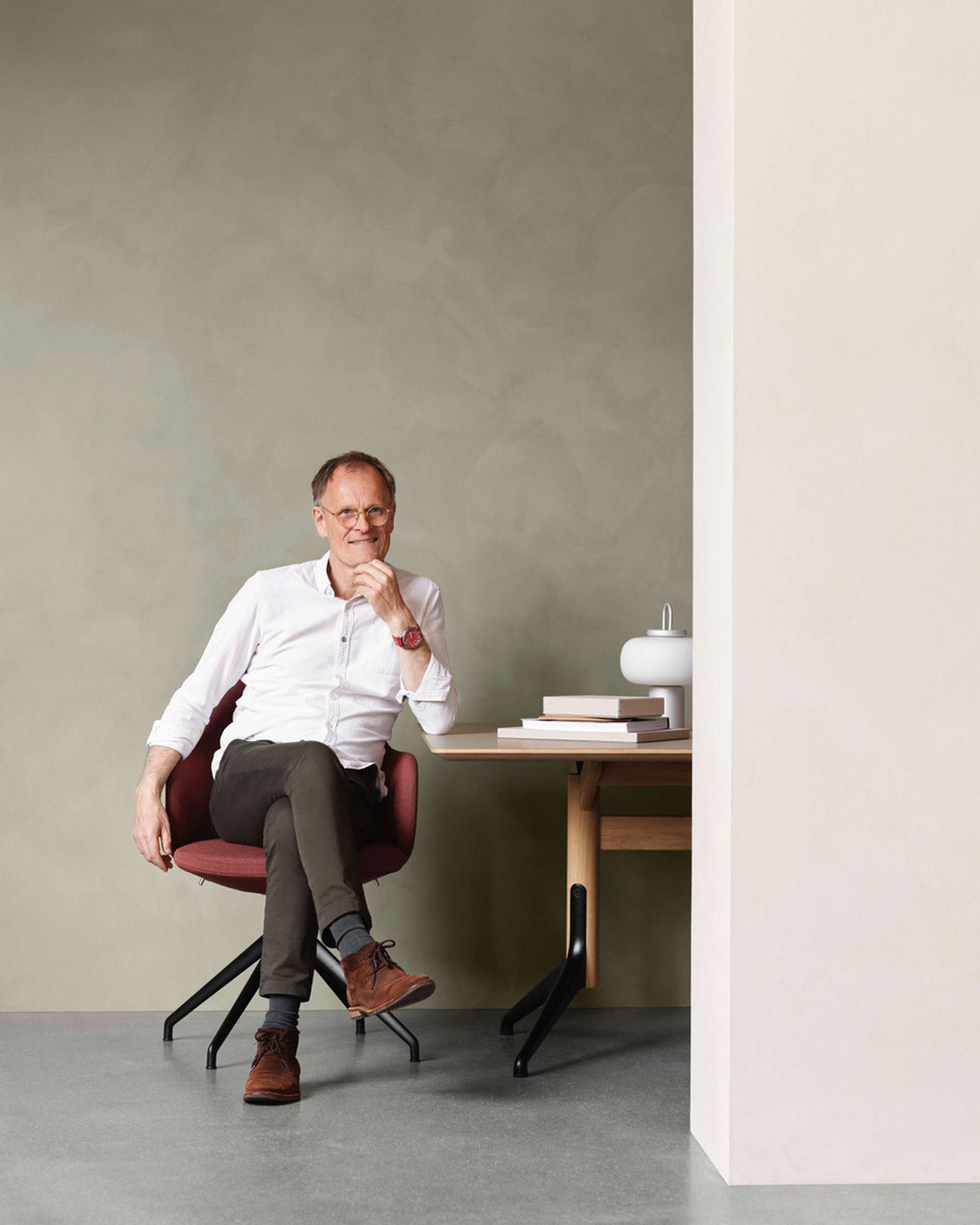
There's a big difference between the drawing and the physical object
Christian: So just seeing it at first glance was like, "Okay, that's just cool. I love it. Let's try this." Whenever you receive a new prototype, I cross my fingers, and I really hope that all I imagined was fulfilled, but this is where the tricky part comes in. There's a big difference between the drawing and the physical object.
There are some cool drawings going on, and then I, of course, also work with the production, and it's a three-part partnership here. So I articulate, of course, all that we really wish to see in this prototype based on all the drawings and all our ambitions of go-to-market prices and stuff, and how much love and care did the production then put into the this product.
Julie: Do you have any good stories from that?
Christian: Of course, some products have been harder to develop here with not just one or two or three prototypes, but a fourth prototype before you see an end result. And of course, as I said, I cross my fingers whenever I receive such a prototype that it's just, "Oh, now it's just there."
It makes sense. It's a good feeling. It's a good experience. Of all the factors that go into a design,
Julie: Is there anything that's non-negotiable for us, something that every design simply must have?
Christian: Yeah, it's non-negotiable for us, I would say, actually it's very basic, but let's say comfort. Right. I don't think it makes any sense to develop a cool design that is uncomfortable. It is not, something that you just need to look at. You need to use it. And at least to me, before you really like a chair, you need to like to sit in it. For me, it's not just something standing in the corner for display. So I think that we are also coming from kitchen, where we talk about, a lot about ergonimics.
You know, when you handle a kitchen, open drawers, open a fridge, whatever, how you move in the kitchen, it has to make sense. And I think that this kind of thinking and always saying, "Okay, this has just to be a basic here. Make sure that this is in place." It's also ruling when we develop furniture. I would say that we have chosen to start at a very high level in terms of quality, setting ambitions that this is something that you, that we and the customer can be proud of.
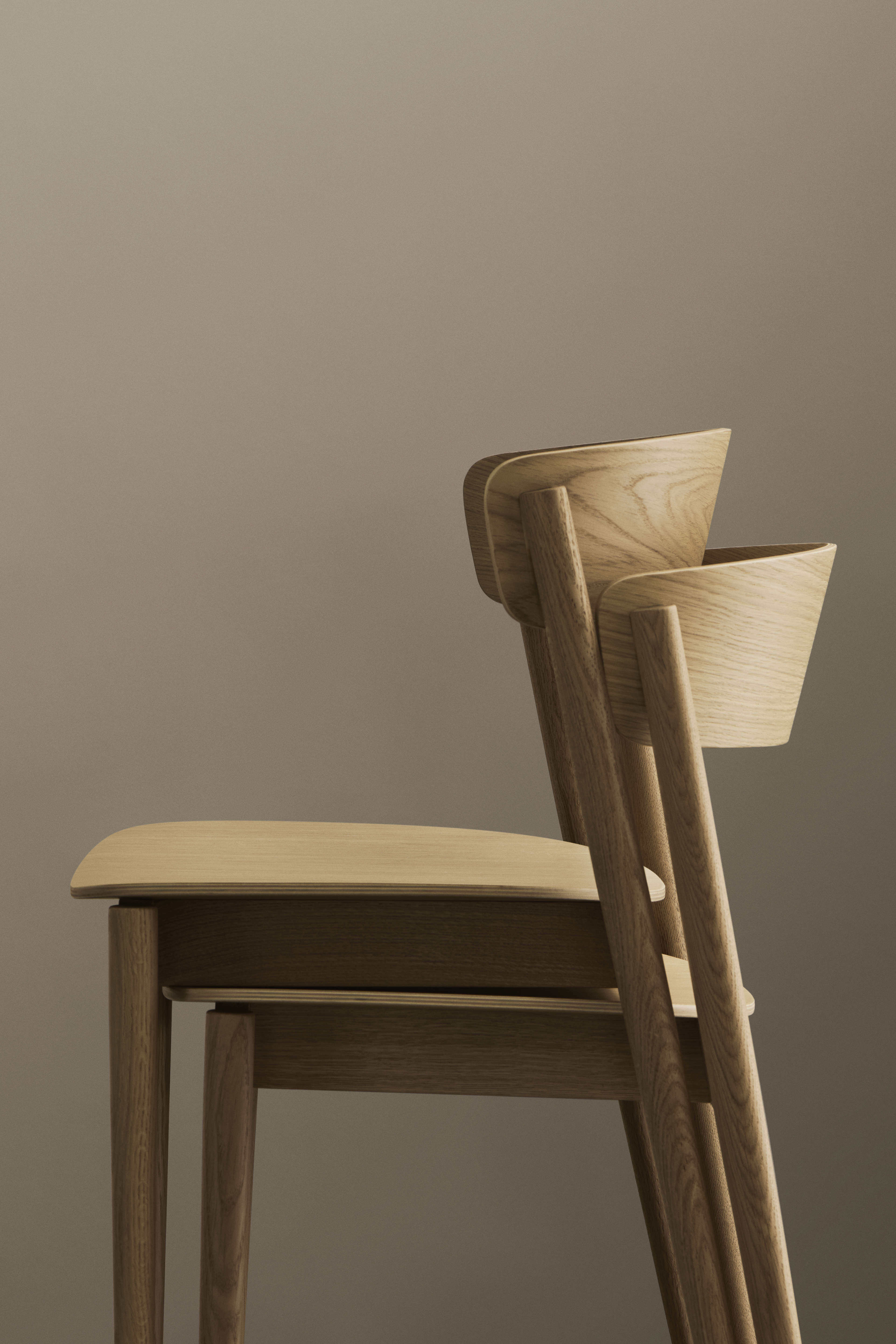
Christian: These are not products that we imagine in just being thrown away after five years as you see many other places. No, it's really high level in terms of quality. And I think that's perhaps the most important when talking about sustainability is reducing the amount of, what you call it, not using or throwing it out.
Julie: The theory of throwaway culture... or consumption culture. How often do you need to buy omething new? Christian has been working on Kvik Living for going on two years now, and the first products have been on the market for more than a year. So I asked him if how he sees Kvik Living now has changed since the early days. Where is Kvik Living headed?
Christian: I really like the direction right now as you also said, you start to see something. You start to basically get a feeling of, okay, this is the mood of it. Yeah, and there's a red thread in it.
There begins to be. Yeah. And it's very difficult to articulate, this... that is something I'm constantly saying to new designers when I bring them in. We walk them through the showroom saying, "This is the look and feel. So whenever you draw something, try to imagine it in this room. Does it fit? Does it bring something nice to... Does it add value without being something that just screams out in the corner that it's something for itself?"
It has to bring synergy. It has to bring some value to the scene, but also trying to get that feeling that, yeah, this looks nice. It makes sense. So I think we're getting there, and it's also about materials and colours, but also about some, I would say some basic, nature of expression that I think that much of it is, I would say a word like friendly.
How do we create the magic between us and the designer?
Julie: How do you get that red thread when you are working with a number of designers? I think you really have achieved it, and I can think of three designers that at least right now that you've collaborated with... or four even if we count the lamps.
Christian: I truly believe that it will be easy and easier from now on.Yeah. Because now we have a base. They can see what we have already done, so they get a feeling of what, okay, what kind of a taste are we trying to create here? But of course, also I think you need to be able to see, and you can see that you need to see the designers and the designs that come forth.
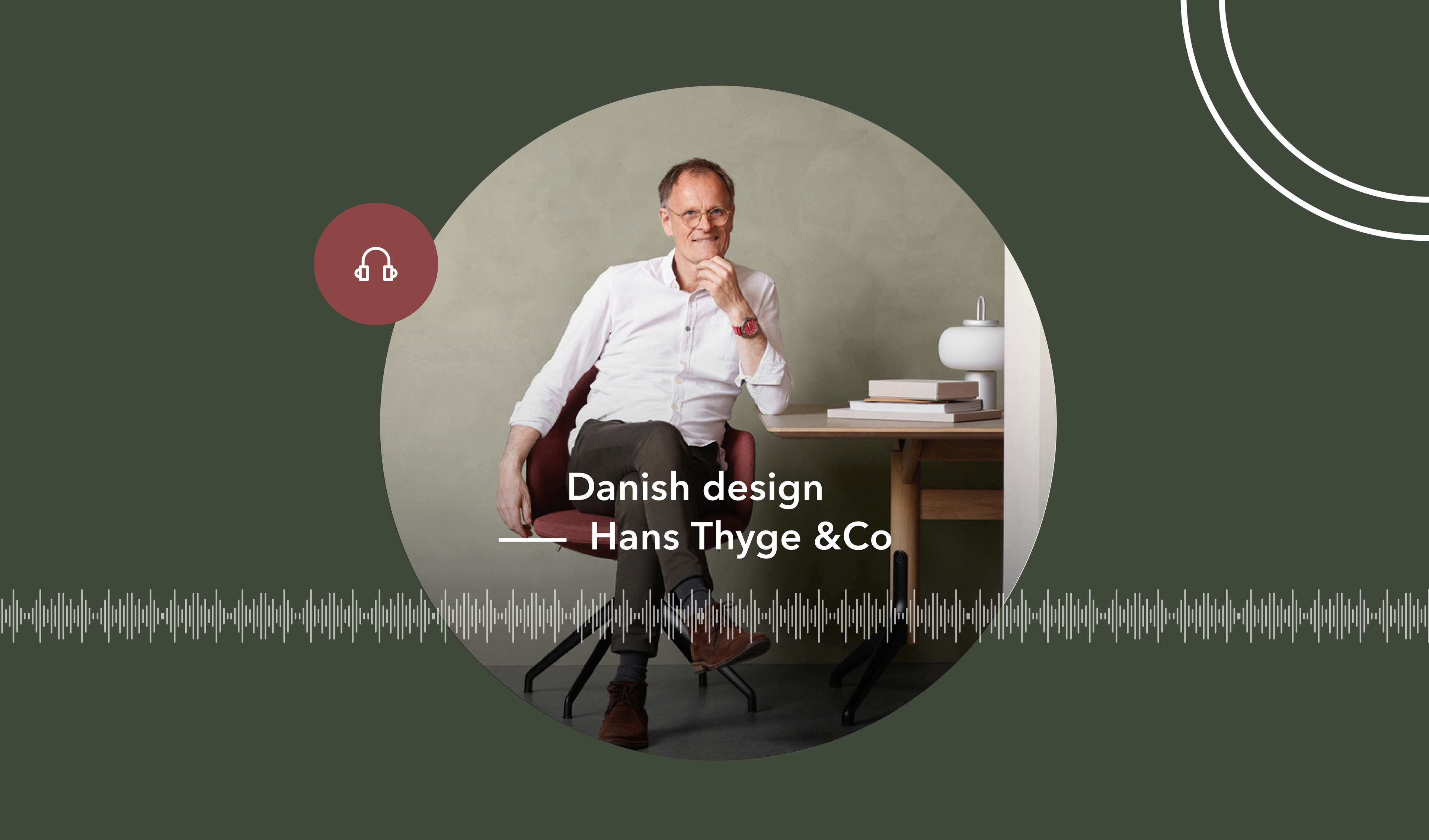
For instance, with Hans Thyge & Co., I can 100% see their DNA. So it is like a mashup here. We are building something, but they are also an identity. So how can we try to mix the two? How do we create that perfect magic mixture of those two things?
How do we make it, let's say, not too much of either one? Because Hans Thyge & Co. has developed some great designs, and some of the designs are perhaps very daring or very industrial, not necessarily matching our nature. But how can we then nevertheless bring in their DNA and still keep our tone of voice?
Julie: Right. Right. And I think they, they are, we are doing that. And maybe it comes in that great cooperation that Hans talked about.
Christian: Yeah, yeah. Definitely. That you develop this relationship and you have this good cooperation. So when they become a bit, let's say, a bit too smart, I have to say, okay. Let's rein it in a little bit, please. Please remember who we are.
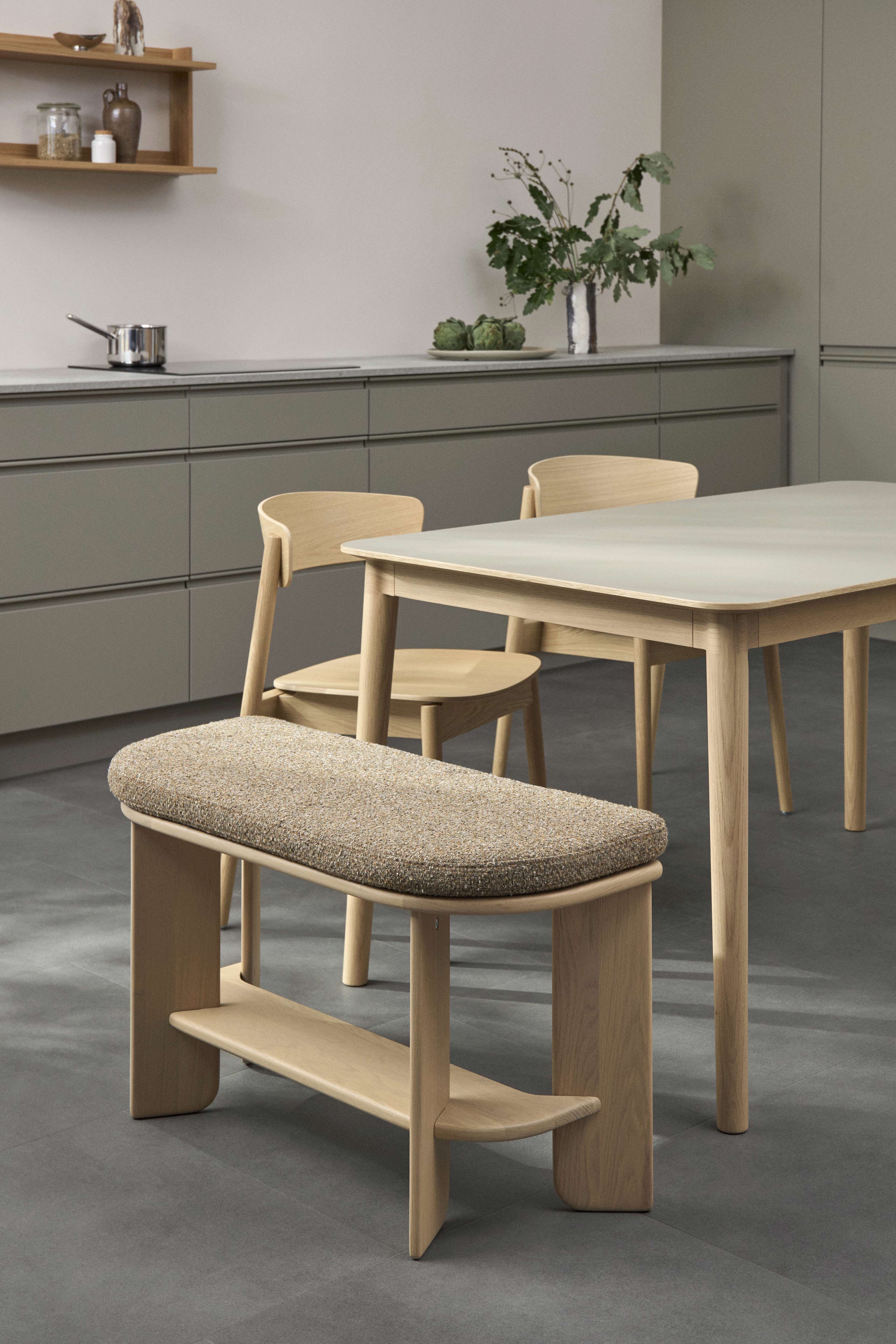
It's not just how it looks, it's how it feels
Julie: Kvik Living was created to blur the line between kitchen and living space. Each piece, from furniture to lighting, shares the same aesthetic, materials, and sense of balance that define our kitchens. Together, they form one consistent design language for the whole home.
Christian: That I think that's also perhaps where it's really tricky and because kitchens are of course a very different thing, and they are also sometimes very basic in their expressions, just being squares and squares. But for instance, looking at our kitchens, they don't really have sharp edges.
Other brands would have something that'd be more hard. That could be ceramic fronts on drawers very, with very hard edges or metal. Also just really sharp lines, and that's not our primary expression. We have even on just our very basic products, it's, we have a little bit of edging, stuff like that.
I think that actually it's, it's very small things that does this trick. That our fronts are just a bit softer in their expression. Also, I would say our foils with this ultra-matte look makes our expression very soft, so the whole surface on the kitchen fronts is velvety somehow.
Julie: It is. It's a very soft expression. So it's not like that we are doing... We're also doing rounded edges of, on kitchens, of course.
Christian: But it's not any kitchen that also has a lot of rounding. That's more natural for furniture. But I think that does a lot, that it does talk to each other. It's not just about how our furniture looks, it's about how it feels to use it.
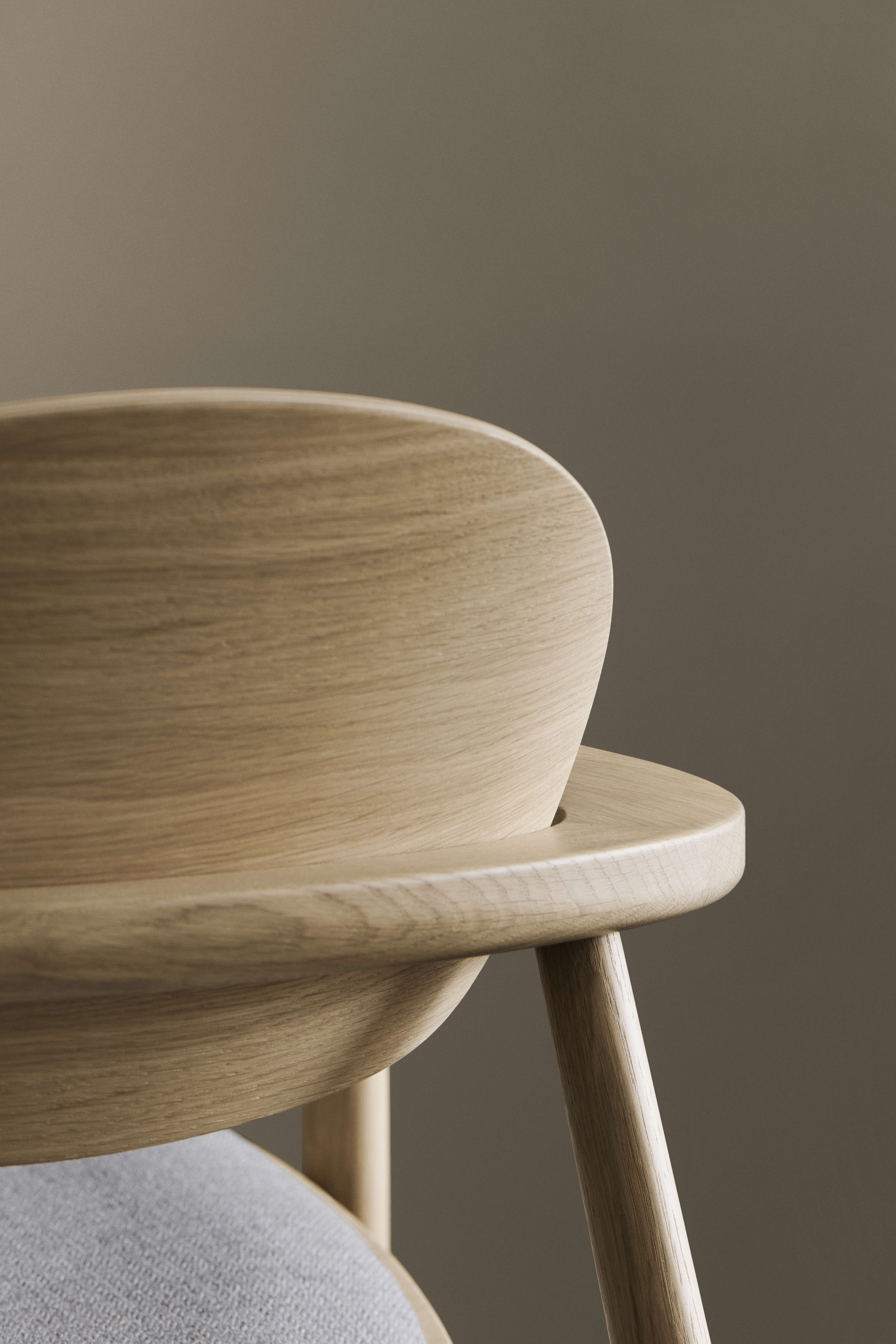
Julie: The way a drawer glides, the way a hinge closes, the way every detail works smoothly and quietly together. Those hidden features are what give Kvik living that unmistakable Kvik feeling
Christian: If you take another example, again, we are a kitchen producer, so drawers in the kitchen is like the main product. Good drawers. Our drawers are good. We have excellent drawers. They glide nicely. They glide nicely. Yeah. They have soft close and they can carry a heck load of kilos. Of course, this function is extremely important to us. So we have the best gliding system on drawers.
And that same analogy goes for instance, the dining table, that, okay, now we need to develop a dining table with an extension system. Then what is the best, what is the coolest extension system out there? Where is it? Who who does it? Is it made by the same people who make our drawers? Nope. Uh, because they are not the masters, they're not that.
We could have chosen a numerous of extension systems, cheaper or more technical in some aspects, and also much more basic or... And I think that effort in finding, okay, who are the masters when this... Who is the most geeky when it comes to extension systems? Saying, "Okay, now that's the choice."
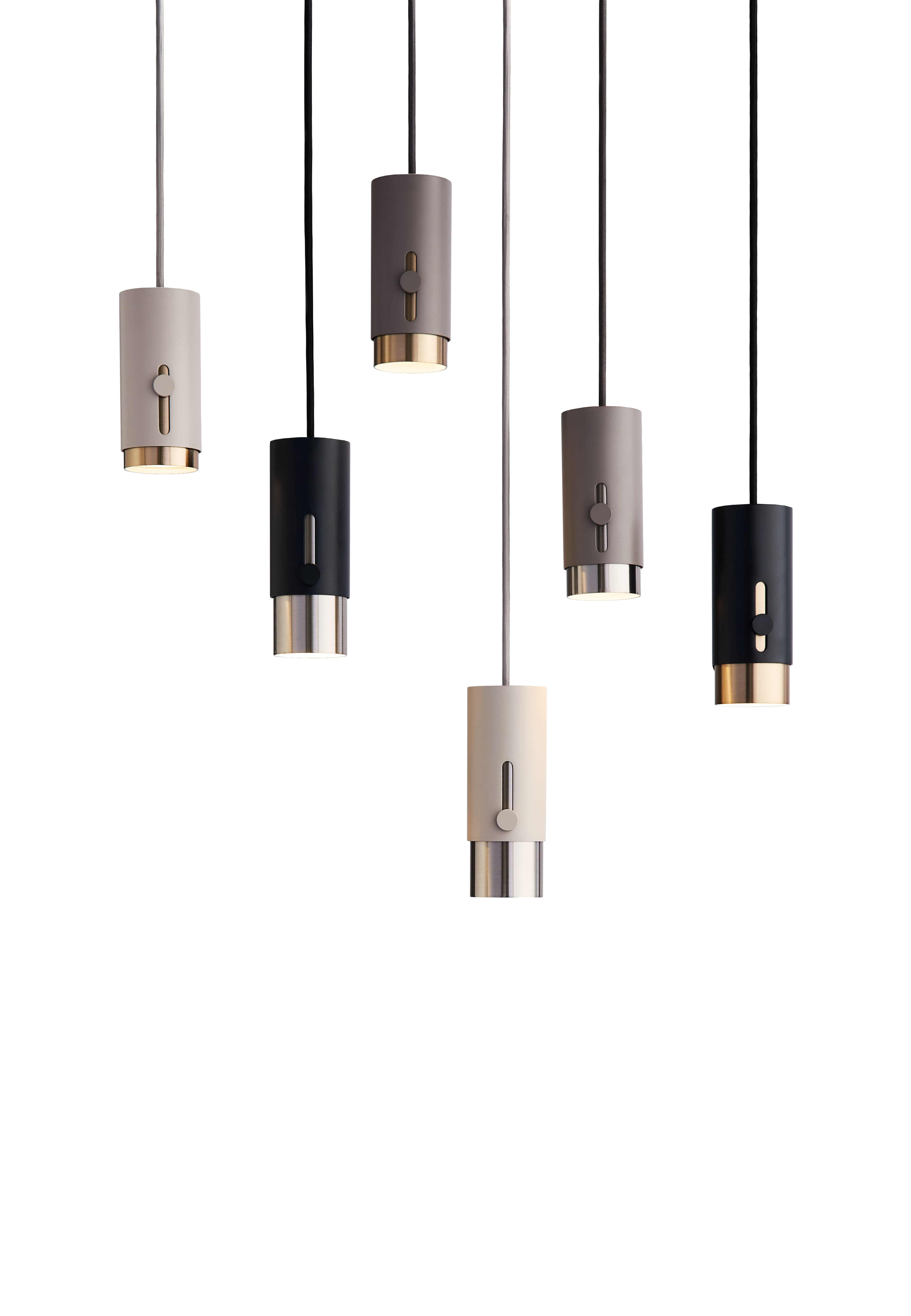
That's the function, the primary function of the product, so it also has to just be really swell to use. The best. And we achieved that, I would say. And that builds so much function into the product that we have a good story to tell here. I would say that the first chapter of Kvik Living is built.
What's next for Kvik Living?
Julie: So what's next? Is there some new space or some new piece calling your name without necessarily saying exactly what we're coming with? Or you can say that if you want.
Christian: Of course, we constantly need to look into both what we call our idea bank and our product pipeline. Because there is a long pipeline, saying, okay, from the maturing idea, "Okay, now we really want to work with this idea," and then to the launch of it, that would mean. That's so long, one and a half years. So of course I have a good idea.
Julie: What are you looking into for in a year and a half from now?
Christian: So of course I have some ideas on what we're gonna see the next one and a half year. Yeah. I won't say all too much- No, of course not. No ... uh, but, uh, but we wanna stay as close as possible to the kitchen. This is still where we see our strength and where we need to, where we need to, uh, build the uniqueuniverse.
So the closer it can get to the kitchen, the more interesting it, it will be for us. Yes. And then the idea bank, it's perhaps 100, 200 ideas. Just some of them being words, some of them being images, some of them being sketches, some of them being ideas that perhaps did not work, but then have to reconsider it a bit. Perhaps it has just to be, uh, to rethought just a tad for it to work, and then it can come up again. And sometimes that just takes a little time- Yeah ... brewing.
Julie: We've covered the vision, the designs, the process, the details, and the craftsmanship. So before we wrapped up, I asked Christian what's been inspiring him lately.
Christian: I've started painting again. So I've, in my earlier years, I did a lot of drawing and painting and stuff like that. But in my early days I wanted to be an architect. Or in my very early days, I wanted to be a, what do you call a glassblower? I've always been afraid of the hot pokers you have to use for it. It was my big dream job when I was a little guy. But now I've started painting again after many years of break because, oh, business, kids, different education and stuff like that.
But I think that my approach there, now I'm doing that very different because I'm actually thinking about a process here. I'm thinking about, okay, how to, how to set the scene from a beginning. What kind of mood do I want to create? What is the colour board? Having some idea ...
Julie: What is the colour palette you're finding yourself drawn to there?
Christian: For me, art has to be colourful. Okay. It has to be something that is decorative. So for me, it's also like catching the eye saying, "Okay. Whoa." So there were some colours.
Julie: Is it abstract?
Christian: It's abstract. It's not in any way naturalism. Okay. And that's because I've done that before, and it simply gets too nitty-gritty for me. Yeah. So I want something that is free. I want something that is just throwing some colour up there getting it created.
I'm really putting some effort in creating a new process for me, saying, "No, a painting needs to be done within three days." Instead of having something that's just going forth and back and doing little details and some kind of an annoying product that haunts me. I'd rather have something like created in days.
Julie: So you're putting a time limit on it?
Christian: I'm giving me myself some just like this job with a boss saying you need to get done here. Don't spend time on that little detail. You are about to create something. And I'm not putting that too much pressure on myself.
Julie: Do, do you have a room devoted to this or where do you paint?
Christian: In the middle of the living room. Just next to the television. So my family can watch TV and then they can see. I'm with my family, so.
Julie: You're hanging out with your family while you paint. It's not something you're withdrawing somewhere to do..
Christian: No. It also, again, it has to be, that's also rule of thumb. It's not something that I'm hiding away saying, "Now I need my me time" and I'm in my artistic corner. So it has to be something that I enjoy. It has to be something that is filled with fun instead of being too serious for instance.
I really like nature. I'm a sucker for nature. I have tons of images on my phone from, of course, different situations during the day of course- Different light and different- Yeah, of course. Early morning, late evening, there are just some cool colours on the sky, and I hide those images in a folder saying, "Okay, this one had something." And I'm lucky to live in an area where you actually have some hills and you have some long views.
And I love that when you have layers of pastels that you have this line, then there is a new colour from a bit longer away. Mm. The further away the colour changes. So those layers in terms of perspective, I love those. And bright coloursmixed and matched with the really hard contrasts. I think that's cool.
And then my chosen tool is a palette knife. So I don't use pencils because they are simply too nitty-gritty for me. It becomes too much of like how much can I make it look real? Yeah. And I think it becomes dull. You don't want it to look real. For instance, I draw a wolf the other day, or I made a painting of a wolf.
Oh. It's a painting of a landscape with a wolf, and the wolf is basically three or four, like lines and splats on the painting. But it really is there, and I love that. It is a wolf. Yeah. It's a wolf. Yeah. No doubt about it. Yeah. No one would not see a wolf looking at that image. Okay. Ah. And I think that's for me, like, art when it's something that, that you have to use your imagination a bit.It's there, you see it, but then when you get close you say, "Is this is that really the wolf?" But it's there.
Julie: And that's it for this episode of The Sociable Kitchen® podcast. Thank you to my colleague Christian Milan for stopping by the studio to talk Kvik Living. We've got more episodes on Danish design coming soon, so please hit subscribe so you don't miss out.
This episode was produced by me, Julie Broberg, with a lot of help and patience from sound engineer Magnus Vad. It was produced at Feedback Studio in the old meat packing district near the harbour in Aarhus.