Behind every successful design are the ones that never make it to market — and sometimes, that’s where the best stories begin.
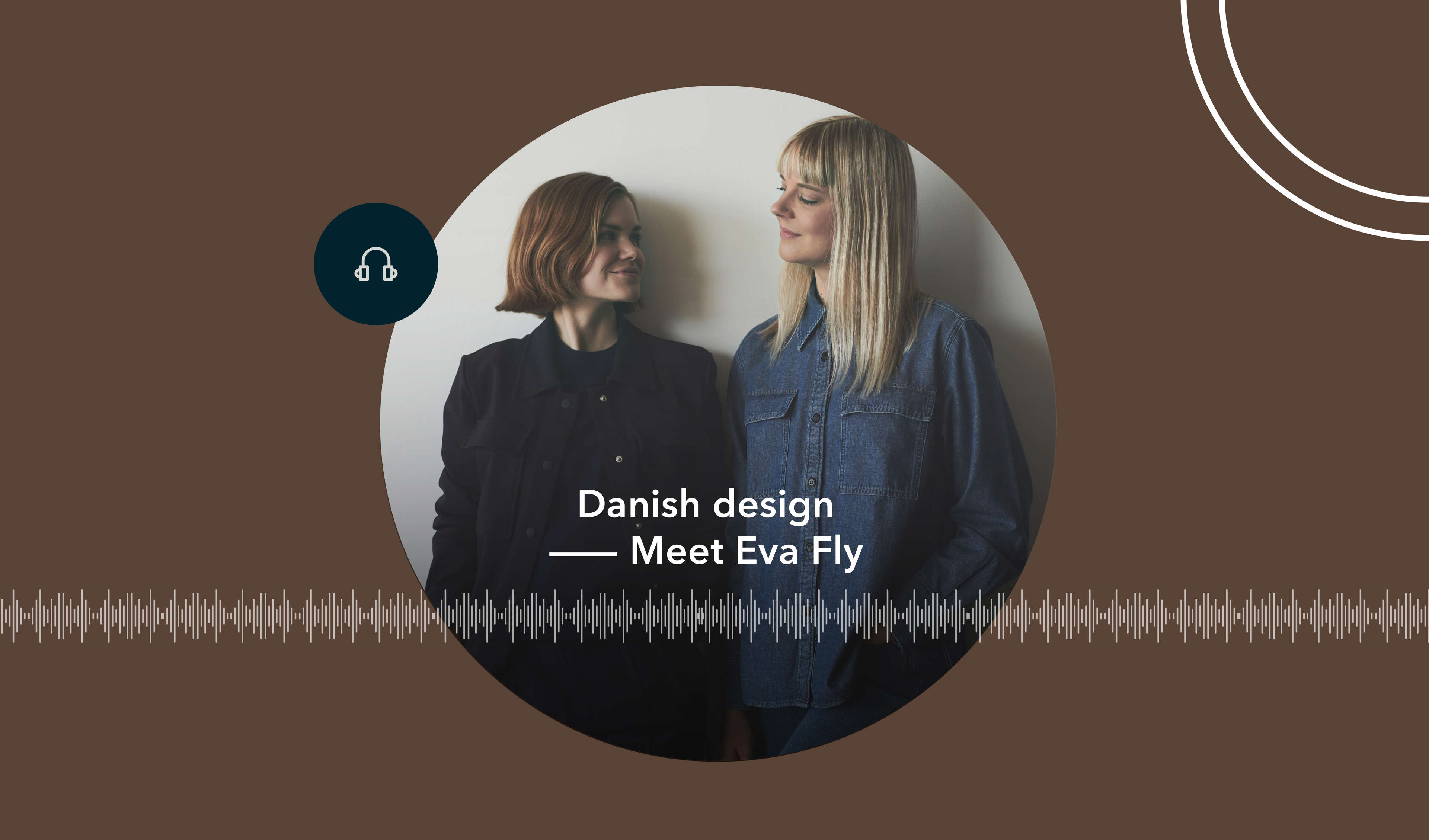
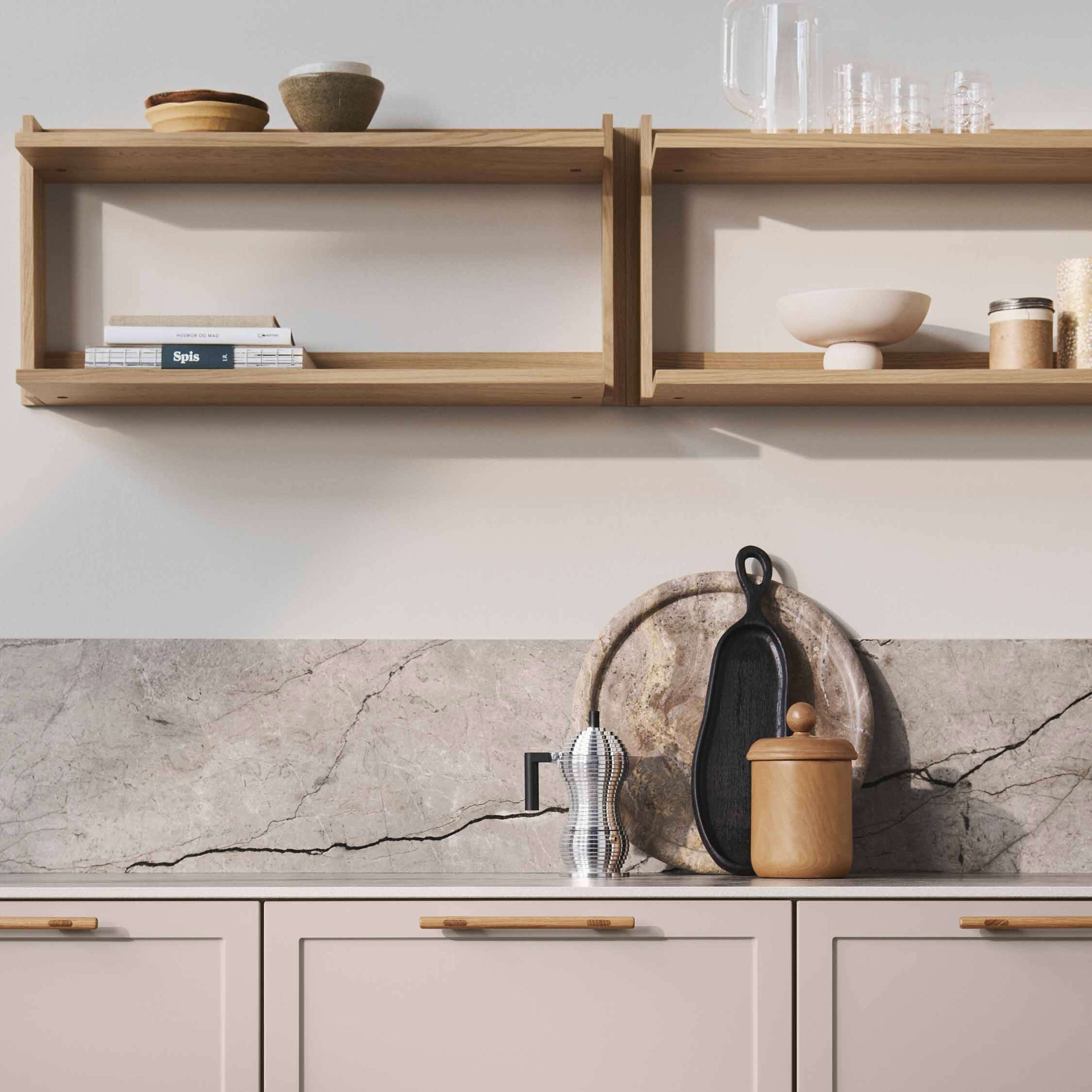
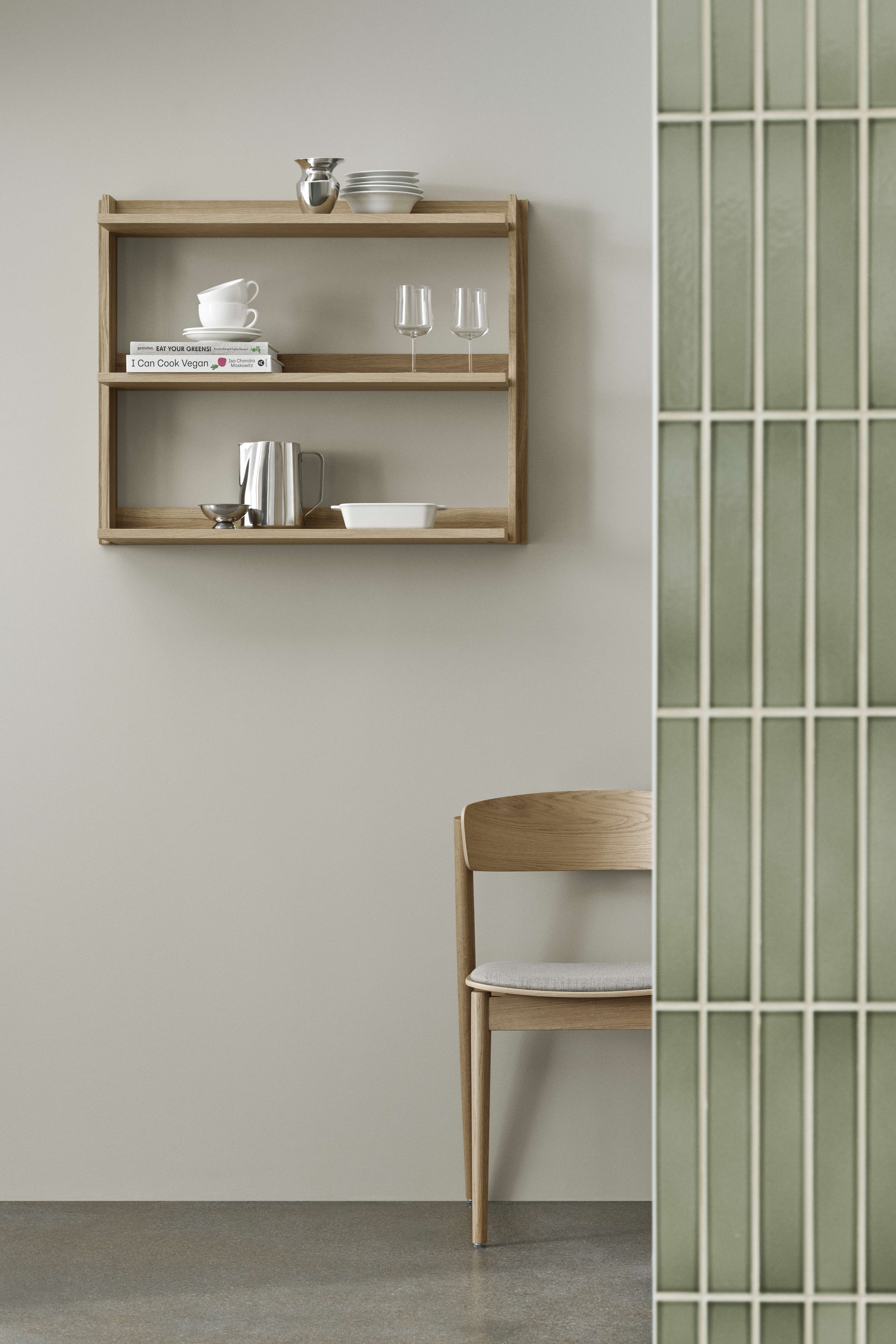
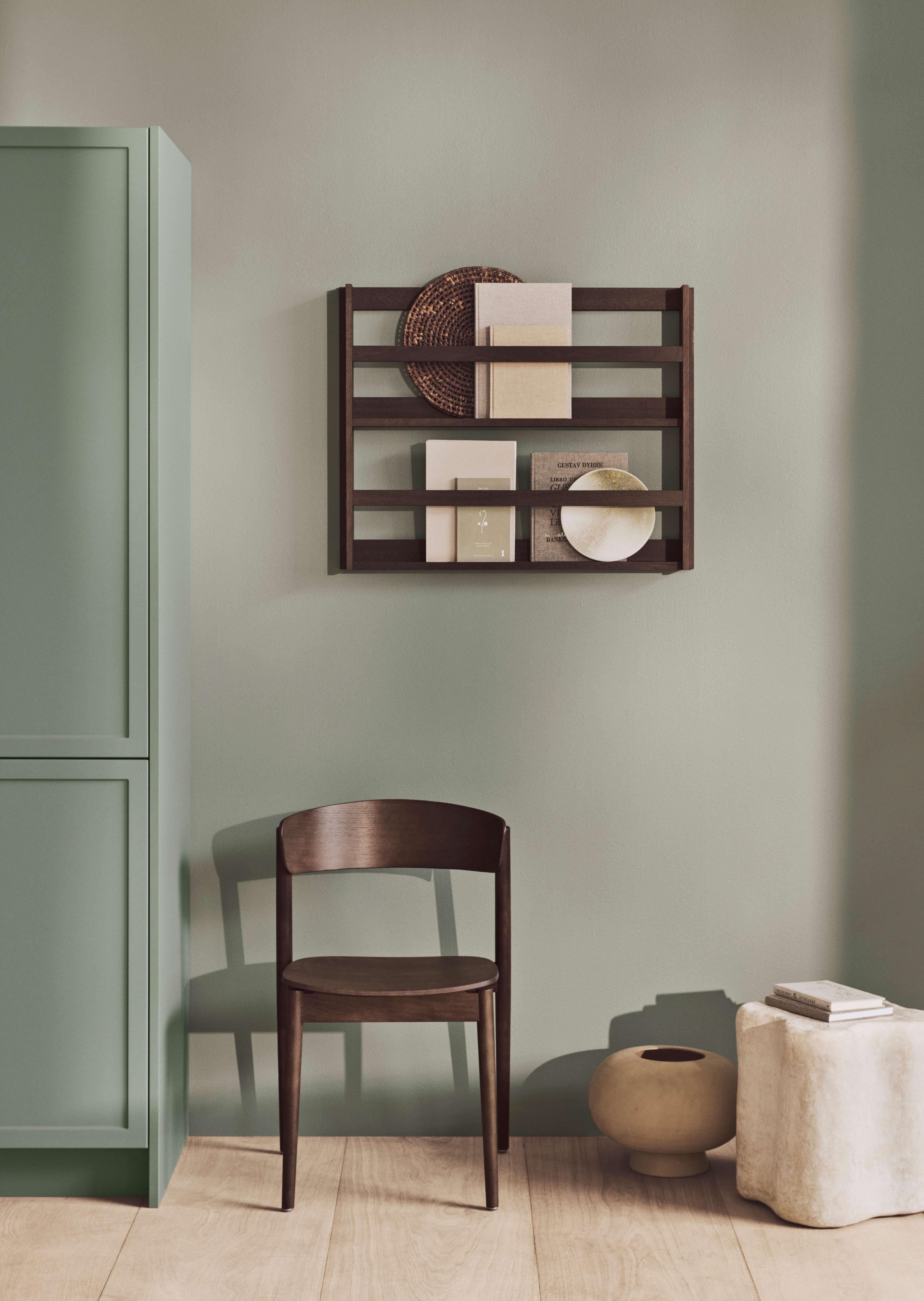
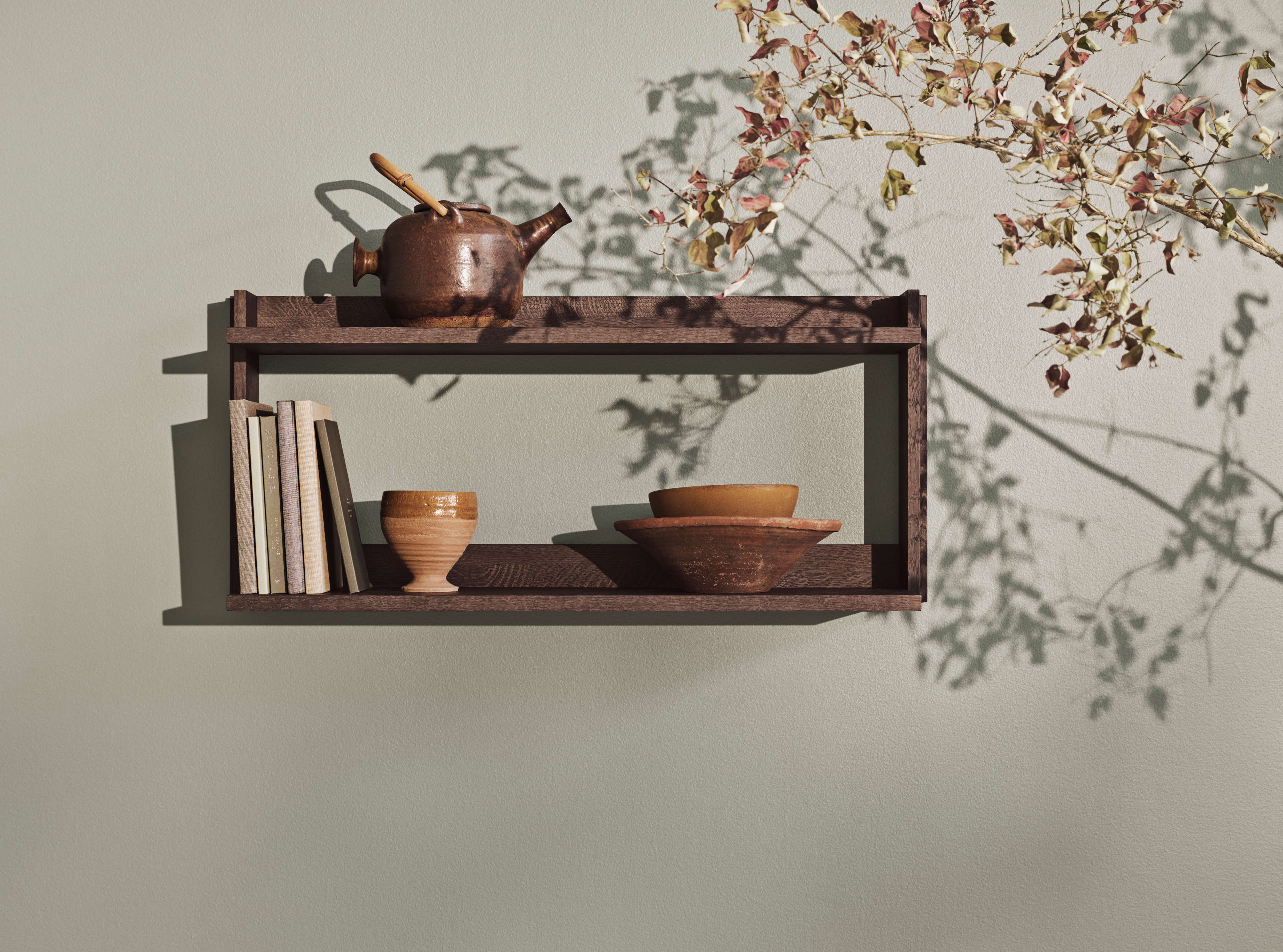
In this episode of The Sociable Kitchen® Podcast, host Julie Broberg talks with Eva Fly, one half of the Danish design duo Bly Studio — known for their work on Denmark’s Next Classic and for creating the wooden shelves and magazine holder in Kvik’s Kvik Living collection.
Eva shares the story of the kitchen concept she and her partner designed for Kvik that never went into production — and how the ideas behind it lived on. She reflects on what defines the new wave of Danish design, how sustainability and tactility are shaping her work, and why a home’s warmth often comes from the materials that feel most human.
From textile kitchens to timeless shelves, this is a story about learning, evolving, and designing with character and good intentions.
This page is a transcript of the episode.
Danish design — meet Eva Fly
Welcome to The Sociable Kitchen, a podcast by Kvik. I'm Julie Broberg.
We're excited to present this interview with Danish designer Eva Fly. She's one half of the design duo Bly Studio, and was also a contestant on the third season of Denmark's Next Classic back in 2022. She and her business partner, Anna Brandhøj, won three of the six challenges during the program. Not long after the program, Eva and Anna worked on a kitchen design for us.
That design didn't end up in production, but we are producing some cool wood shelves that they designed. But we'll get into all of that in this episode. I got the pleasure of watching the whole season of Denmark's Next Classic in order to prepare for our conversation.
The shelves were part of a kitchen project that we made for Kvik
Eva: I'm happy to contribute to watching TV part of work. So my name is Eva Fly, and I'm one half of the design duo Bly Studio. The other half is Anna Brandhøj. So we are two female designers, and we met each other at the Royal Academy of Art in Copenhagen where we both went to the furniture department and started working together there, and then continued our collaboration after we ended our studies.
Julie: You have done some shelves for us, which are out there in part of our Kvik Living line. Kvik Living is quite new for us to have this sort of kitchen adjacent furniture and accessories. And so all of the things that we've had designed for the Kvik Living line are helping us define what Kvik Living is. I think we're getting sharper on what that is. But some... The shelves were quite early in the process. So what was the brief to you, I guess is what I'm asking.
Eva: Actually, the shelves were a kind of a kitchen project that we made for Kvik. So we were actually contacted by Kvik to make a new design proposal for a kitchen for them. And we had a lot of ideas, and we also proposed a lot of different directions. And one of them was this direction where we made a textile kitchen front. So it was like a wooden frame with a stretched textile instead of these massive fiber boards that we usually use for kitchen fronts. So, as a part of the design of this kitchen, we wanted some open storage as a substitute for the top cupboards.
Julie: Oh, okay. I didn't realise it came out of that. So they were hand-in-hand. So the detailing on the shelves and the magazine holder is actually a part of that whole design. Of the whole kitchen design. Interesting. But it's interesting also, though, that even though we didn't move ahead with that kitchen, they feel like Kvik. They feel like they go with all of our kitchens
Eva: So that's actually interesting. Yeah. We also wanted them to do that, so when we designed them, we wanted them to be connected to the original kitchen design that we made, but also so you could choose them for any other kitchen that you would buy.
And it doesn't have to mean that you didn't make a good design
Julie: Wow, that's great. On that kitchen, how far along did it get? I know I saw prototypes of it. So I know that we got to a prototype stage. Yeah. But how was that? Let's just talk about that process. Yeah, yeah. How does it even work? Mm. You get contacted and then what happens?
Eva: Actually, I really, I would really like to talk about this because I think as designers we most often talk about all the projects that are successful, but the job is actually making a lot of designs that don't make it to the end customer, and you then take into the next project. And it doesn't have to mean that you didn't make a good design. But when you have a good design and a good concept, you still have like a far way to go that it has to fit into production, it has to end up having the right price for the right target group.
And it also has to fit into the brand and what production facilities do they have access to, and is it possible to, to make it in a good enough quality to meet the standards and the price. And so this is actually a, a very big part of a design process.
Julie: Yeah. But when you came with it, how did you start out? How did you arrive at thinking, "Okay, we wanna, we wanna have fabric on the doors and have a frame with fabric on it instead of what most kitchens look like.” Were you just trying to think outside the box of- Yeah ... or were you thinking in terms of sustainability or material choice in that way?
Eva: I think both. So it was the first time we were going to do kitchen design- And we were just, like, really green and just started really, like, from the bottom and just really did a lot of research and investigation. And so we actually saw that the way that most kitchens are designed now. They are actually quite heavy and massive, and that's, it's been done so it's easy to mass produce, and it's modular, so it's easy to fit in all kinds of homes and that's a good thing. But, like, 200 years ago, when you made a kitchen, you would make probably just have shelves, and then you would have maybe like a drape in front of it of some fabric to... Yeah. So that would be the kind of storage that you would have then. And now you use a lot more material to make a kitchen.
So that was actually the approach, and I think if we could have made a kitchen that was, like, more frame based, but of course this had to, to fit onto Kvik's standard, uh, modules.
Julie: Yeah, of course. Yeah. There's so many things in a kitchen that are just the measurements that they are and they are standardised. And of course that's part of Kvik's concept, right?
Eva: Yeah, of course. Yeah. Is the inside of everything is the same. And that's what makes it a good price, and it makes it good for mass production, and so there's a lot of qualities in that.
But this led us to this idea about using the fabrics as a part of the kitchen instead of having these fiber boards as, as kitchen fronts. And the qualities of the fabric is that it also has acoustic qualities. So it would have a softer sound environment in your kitchen. It's also, the textiles that we chose were, like, semi-transparent, so if you had light inside your cupboards you could see through. So it had the same transparency as like a curtain or like frosted glass, which you also see a lot in kitchens. And so I think a funny thing about this was, like, making the choice of textile still feel practical enough for the user.
So the textile was, like, mounted on the frames with, what is it called?
Julie: Velcro? Oh, was it really? Okay. So you can just take it off and then put it in the washing machine and put it on again. Ah, okay.
Eva: So it, it shouldn't feel, like, unhygienic to use. And we got quite far with it because Kvik really liked the concept and we were quite surprised that they chose that concept because, uh, we thought ourselves that it was quite bold. And we went very far with it, with the prototyping as well. But, it got stuck in a place where it became too expensive, the production of it, to match, like, the needs of Kvik's end customer.
Julie: You surely learned a lot from the process as well. So what were some of the learnings that you would take away and maybe put into the next design?
Eva: I think that there's probably a learning about making the right match between the concept and the brand that you're designing for. I know that Kvik really wanted this to happen. Yeah. But, but maybe as we, both parties experience now, maybe it should have been for a manufacturer that has more high-end kitchens.
Julie: Yeah, or that already has more daring designs. We make kitchens for the eight out of 10 people.
Eva: Exactly. And there's no shame in that because- No, not at all. No, no ... I love democratic design. Yeah. And we would really love to have a kitchen design for Kvik, but, but this one I think has to move on. But then we're really happy that it ended up with these shelves and the magazine holders that ended up just fitting just right into Kvik Living.
Julie: And I think helping us, like, define what it is that Kvik Living is. We had these notions of it being a new category for us, but there's a lot of places you can buy furniture for your kitchen. But we wanted to give it, like, a Kvik signature, and I think it fits really nicely with our kitchens, even if it was designed for a different kitchen.
Eva: Thank you. I didn't even know that, so I think it's really good.
It's a proud heritage to be part of
Julie: Even though that particular kitchen never made it into production for Kvik, the ideas behind it, simplicity, tactility, materiality, and honesty are still deeply rooted in Danish design.
So I asked Eva how she sees that proud tradition today, and how a new generation of designers are interpreting it in their own way.
Eva: I think as you say, it's a proud heritage to be a part of. But when I look at, like, new emerging designers now, I don't see it as anything holding them down. No. Or it doesn't seem like they have anything to live up to. No ... I see new agendas, agendas about sustainability. I see a lot of designers working with materials, being very experimental with materials, also being very experimental with new shapes, new styles that doesn't look at all like the classics.
15 years ago when I started at the academy, it was a very big part of being a Danish furniture designer. And I also think that the Danish classics really had a strong renaissance at that point in the market.
But I think they will always be relevant, but I also like that, yes, we have some very important agendas to work with that are not about carpentry anymore. I also see a lot of very interesting designers working with the social economics in their projects and looking more at the human side.
Julie: How do you explain that? Is the human factor coming in a bit more? I feel like all these conversations I've been having, it's been dawning on me that the things that people are saying are, like, more considering the human and how Looking more at the human side. That it's more tactile. It's more, like, closer to the human
Eva: I think that's correct in some sense. Yeah. And maybe that comes out of this, like, focus on the materials and focus that you end up with that being hand in hand. As I said before, I also think the, we have this agenda up around environment and sustainability.
I think sustainability is an extra dogma today
Julie: How does that come in now? Is it just something you start with now?
Eva: I think it's like an extra dogma. So we have, before maybe you had the aesthetics and you had functionality. But now you also have a climate impact. And for us as a studio, it's something that we have started working with in all projects. So we make our design decisions and decisions around materials and production also based on calculations that tell us how to lower the climate emission of this project. Right. We also get contacted because of that because we know how to work around it. Or work with it.
We just did a lounge furniture collection for Eilersen. And where we have calculations on all the products. And also used the calculations as part of the process.
Julie: Really cool. We recently did LCAs on all of our kitchens. So we can also tell our customers what the climate impact. And have a third party who gave us the numbers. And then we can calculate. So if you came in to get a kitchen, it will be on your offer. If you've chosen a foiled front, how many plastic water bottles were recycled to go into it, how many kilos of recycled wood were used, and then the CO2 footprint. And then we also do the CO2 footprint of the worktop separately, and this is where I think about that giving people the choice. We're not telling them, "If you choose a laminate worktop, your CO2 emissions are much lower," but if you want a stainless steel, it's much higher, but there might be a trade-off. It might also last you longer. And it will just get more and more beautiful along the way. So we provide the information so that people can make the decision that's right for them.
Eva: Yeah. And that's what I hope is the future, for products and consumption of products, that we as users are gonna not only look at the price tag, but we're also gonna look at the number of the CO2 emission. Yeah. In the same way we look at the price, we're gonna look at this. And hopefully make an educated decision.
I'm a little obsessed with Friis & Moltke
Julie: Talking to Eva, it's clear that design today is as much about knowledge as it is about creativity, giving people the information they need to make choices that feel right for them. But behind every calculation and material choice, there's still a designer observing, feeling, and finding inspiration in the world around them.
So I asked Eva what's been inspiring her lately.
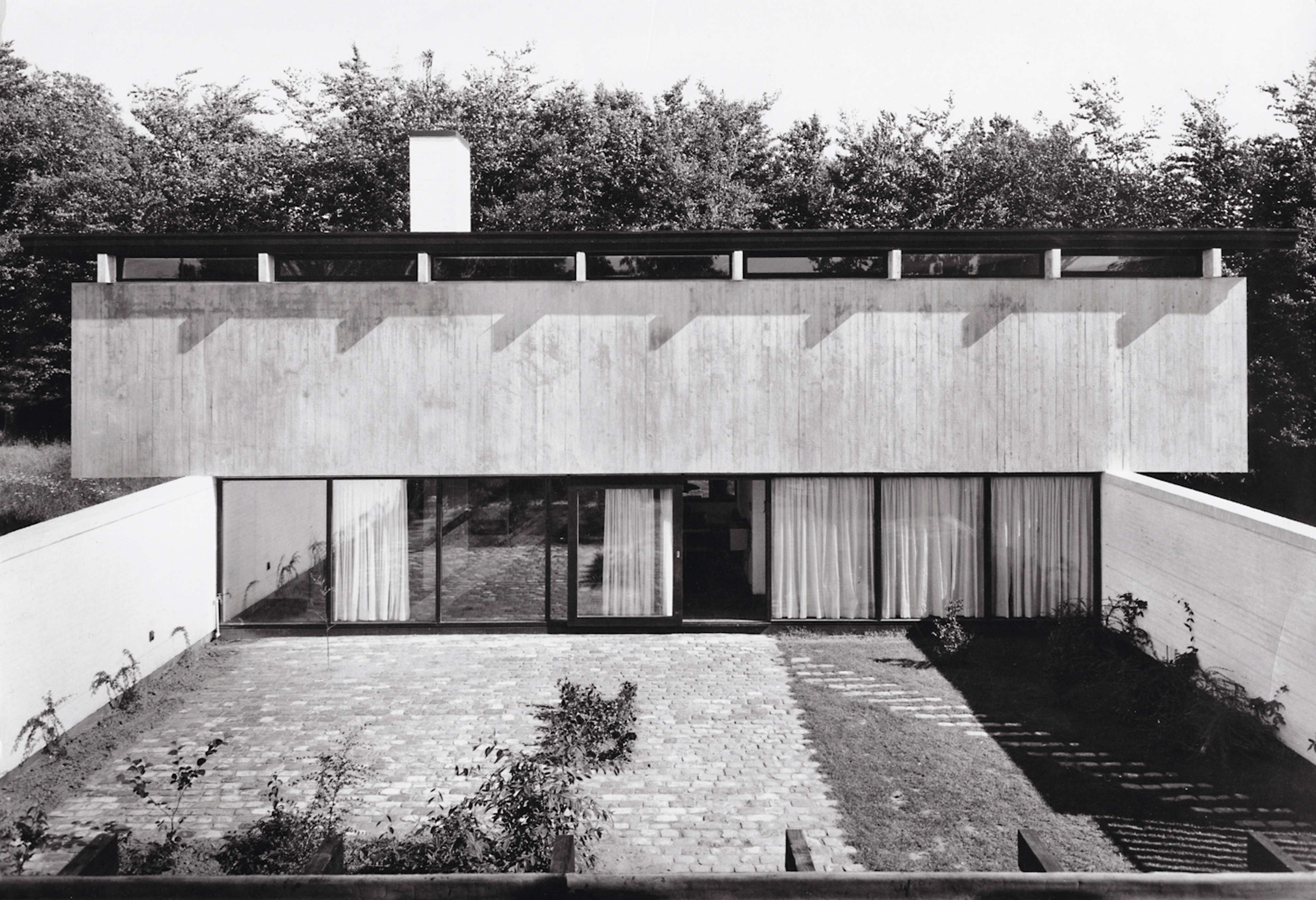
Eva: Right now I'm, to use, like, a trendy word, I'm a little obsessed with Friis & Moltke, which is Danish architecture studio from the '60s. Okay. They're actually based here in Aarhus. They did a lot of domestic housing in the '60s and '70s.
And the reason gotten really into reading everything about them and looking at all the inspirational pictures and stuff, is because my husband and I bought a house half a year ago. And it's not a Friis & Moltke house, but if maybe you, like, squeeze your eyes together a little bit, you could think it was. It could look like one of their houses, like, a '70s house with a build-up roof, like, a flat roof. And so moving into that house, and we don't have to renovate.
It's in good condition. Everything is painted white. And I have this desire to turn it back to what it was.
Photo of Knud Friis' own house from Friis & Moltke's website.
Julie: Earlier in the episode, I mentioned Denmark's Next Classic, the TV program where Eva and her design partner Anna from Bly Studio took part. Eva stepped in front of the camera since Anna had just welcomed her first child, and together they created six completely new products in just five months.
Their work came out on top in three of the challenges, and two of those designs are now out in the world available on the market. I had to ask Eva what the experience was like. Five designers, six intense challenges. It was a whirlwind.
Eva: We are close and we still, we're still connected. Yeah. And so even though in the show we are competitors, but we are most of all colleagues. We spent so much time standing there when the camera was off being like, "Oh, it's so beautiful what you made. What did you do there?" And so, like, the curiosity towards each other's projects were also a big part of it.
Julie: They were so different from each other what you produced.
Eva: So maybe the feeling of competition wasn't that strong. Of course, you wanted to win because you were doing something so different ... the category, because it was so different. Yeah. So different. And, yeah. Yeah. So it was very different things we came to the table with, and it was amazing. Yeah. It was a good experience. Yeah. Yeah. So no hard feelings. None.
Julie: No ... about Anders and his chair? No, I could imagine.
Eva: Of course, when you're standing there, you want to be the one.
Julie: And of course, you had a really good chance with three of the six being yours.
Eva: Yeah, I did. But you never know. But they were so good. We had good judges and I think we all had a great respect for what was chosen, like, both in each category...but also at the end.
Julie: I could imagine. Maybe that's very Danish, too.
Eva: You think so?
Julie: So in America people would be more competitive...their elbows would be a little sharper, and they might be more enemies. That's why I love living in Denmark. It’s so much better. We're just all friends.
Thank you so much to Eva Fly for joining us here on The Sociable Kitchen® podcast.
Bly Studio has designed two kitchen shelving units for our Kvik Living line, a regular shelf and a magazine rack. They are available in our web shop on Kvik.com or at a Kvik store near you.
This episode was produced by me, Julie Broberg. I'm Senior Content Manager at Kvik. I couldn't do it without the help of sound engineer, Magnus Vad.