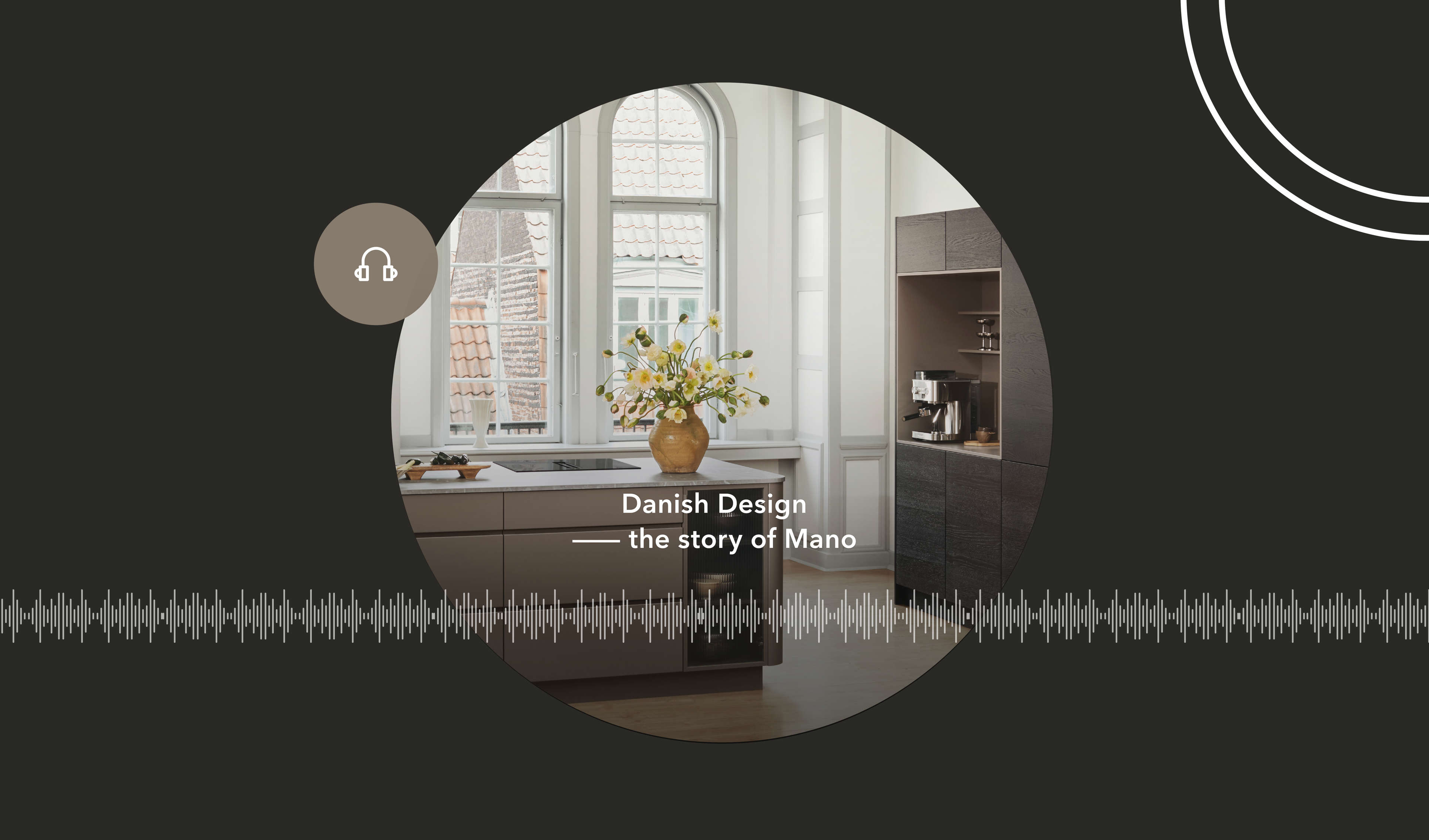
What makes a kitchen design stand the test of time?
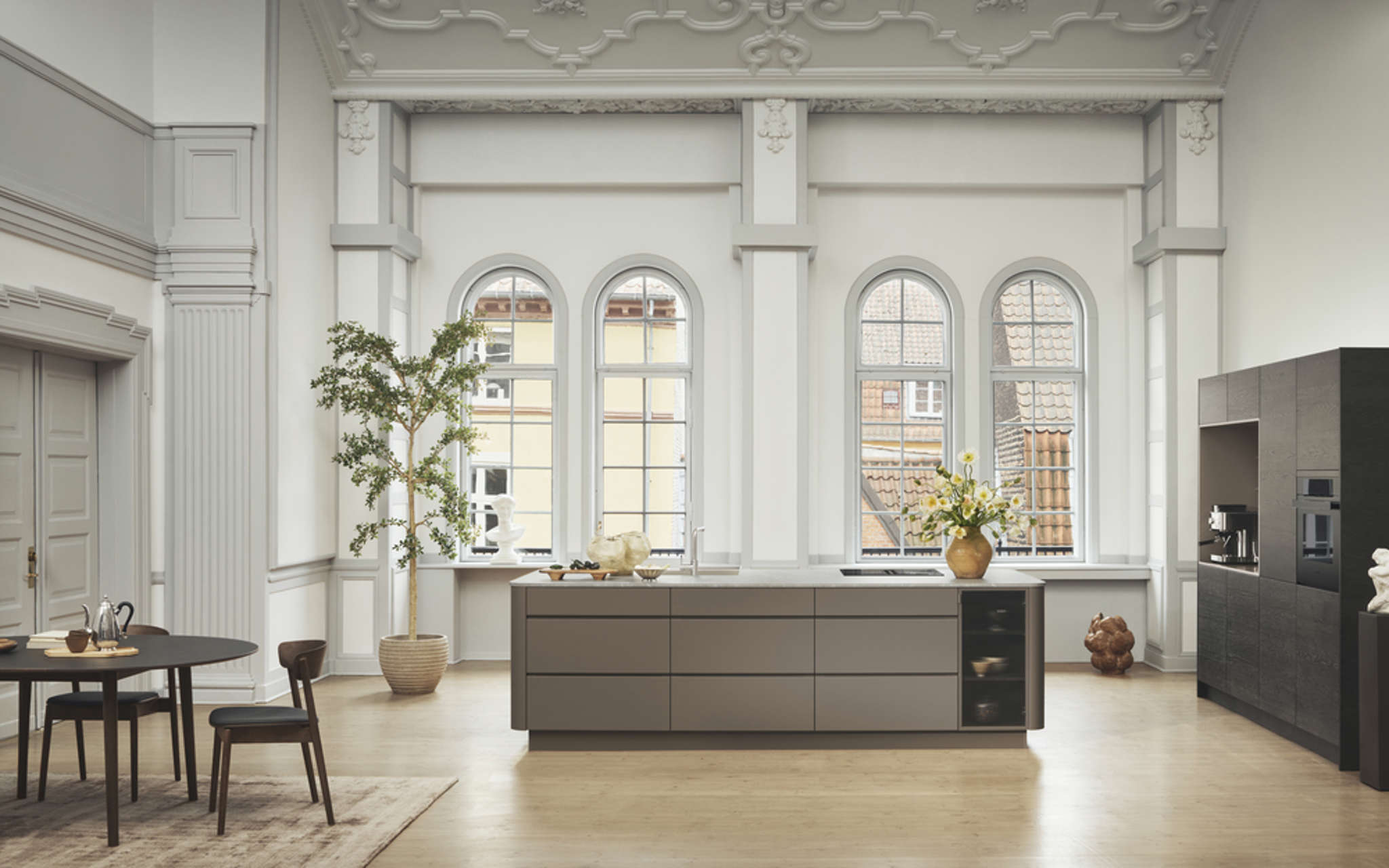
More than 20 years after it was first introduced, Mano remains one of Kvik's most enduring and recognisable kitchens. With its clean lines, integrated handles and understated expression, it has become a modern example of timeless Danish design — proving that simplicity, craftsmanship and functionality never go out of style.
In this episode of The Sociable Kitchen® podcast, host Julie Broberg explores the story behind Mano with original designer Jens Erik Nielsen and Kvik's Category Management Director, Claus Johnson. Together they discuss the thinking behind the design, how the integrated handle became its defining feature, and why the best Danish design isn't driven by trends but by creating products that people want to live with for decades.
Below you'll find the full transcript of the episode, exploring the design philosophy behind Mano, the principles of Danish kitchen design, and how thoughtful craftsmanship can create products that remain relevant across generations.
Listen to the story of Mano
Welcome to the Sociable Kitchen®, a podcast by Kvik, I’m Julie Broberg.
In 2004, the world was full of new ideas.
Phones snapped shut with a satisfying click.
Ringtones felt like a personality trait.
Cars were getting bigger grilles and bolder shapes.
And kitchens…followed trends just like everything else.
Some of it felt exciting.
Some of it felt like the future.
Most of it didn’t last.
But that same year, something much quieter was introduced.
A kitchen.
Designed in Denmark.
Without trying to be the next big thing.
More than twenty years later, it’s still here.
Still being made.
Still being installed.
Still feeling…right.
This is the story of Mano.
If we want to keep it simple and elegant…what can we remove?
Julie: When Mano was first designed, it wasn’t about creating something dramatic. It was about solving a problem.
As the designer of Mano, Jens-Erik Nielsen, who worked for Kvik for many years, says in his original notes from back then, “We could see a trend moving away from handles… we wanted to create a hand-friendly design.”
That idea became the defining feature: a kitchen designed for the hand.
Not for the eye. Not for trends.
For everyday use.
Jens-Erik went on, “The ergonomics part was very important… we worked a lot with the handle cut-out.”
But Mano wasn’t just about the handle.It was also about restraint.
As Jens-Erik asked himself during the design process,
“If we want to keep it simple and elegant… what can we remove?”
That sounds simple.
Until you try to do it.
But Mano succeeded.
Henrik Gade, today Kvik’s Director of Strategic Purchasing, recalls that even those who were involved back in 2004 were taken aback by the success of Mano. They sold 60,000 fronts in the first four months it was on the market. They couldn’t keep up with the demand at all.
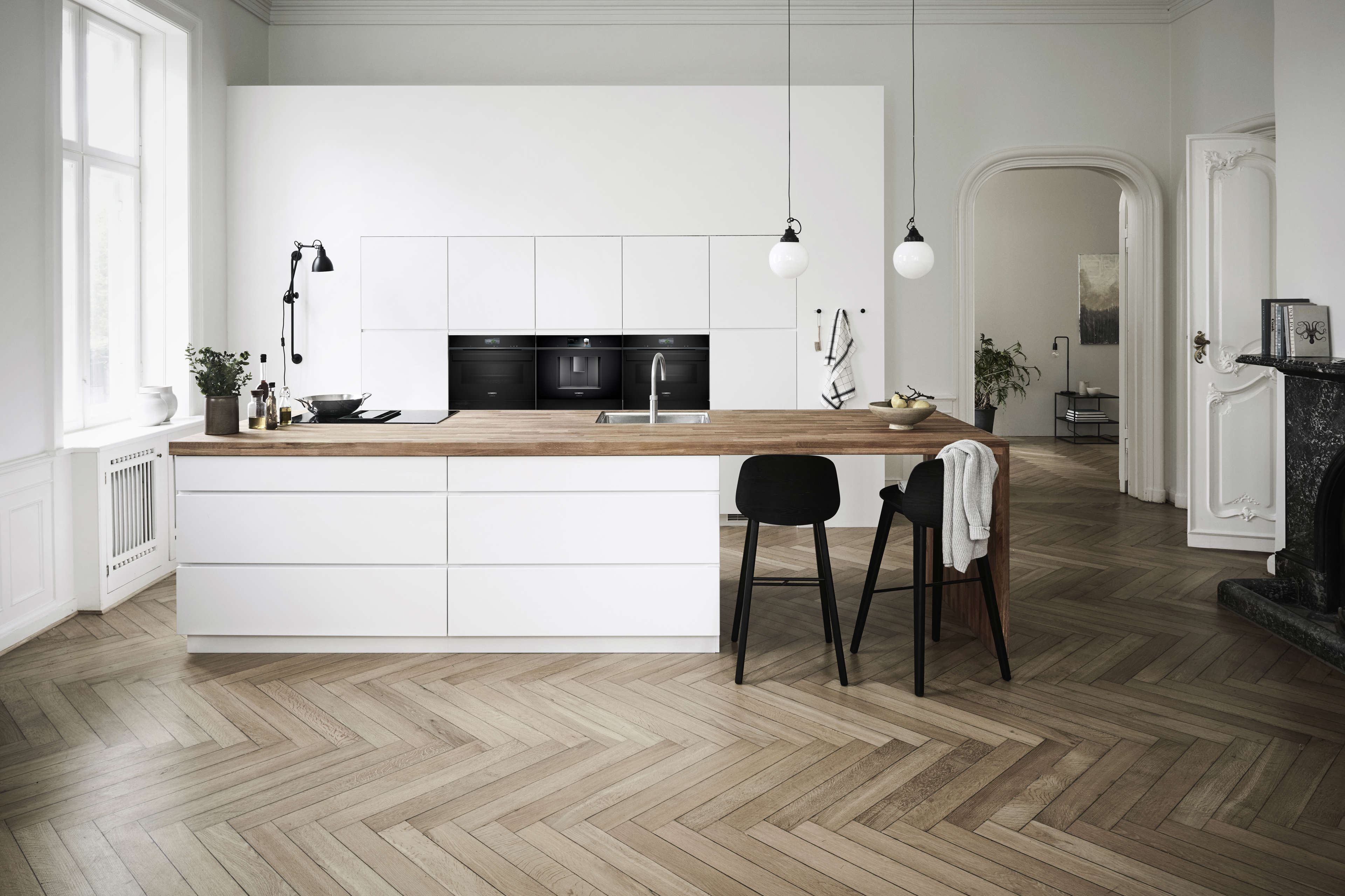
A carpenter will look with our fingertips
Julie: To understand Mano, you have to understand something about kitchens.
They’re not just looked at.
They’re touched.
I talked with Claus Johnson, Kvik’s Director of Category Management & Design about this tactility.
Claus: A carpenter will look with our fingertips. That's actually what I do. I let my fingertips touch the kitchen and see if all the joints are flush and if they are tightly connected and if the kitchen fronts are lined up and all of these things because if that's not the case you can really destroy a perfect beautiful kitchen design.
Julie: That’s where Mano lives. In the details you don’t notice — until they’re wrong.
And in something else that Jens-Erik mentioned in his notes:
“The horizontal lines… we wanted continuous lines going through.”
That calm, continuous expression became Mano’s signature.
Not loud.
Not decorative.
Just… balanced.
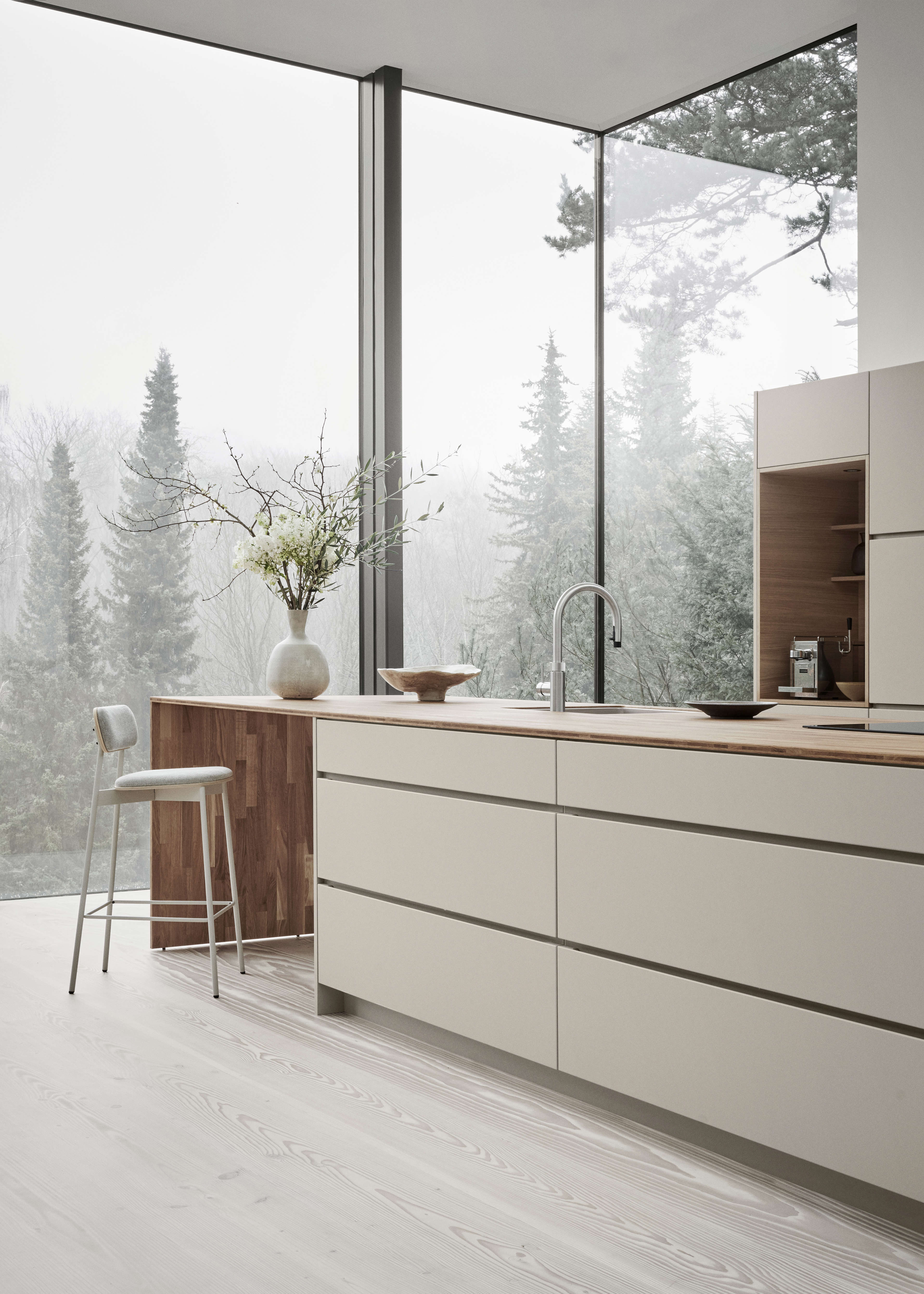
Julie: Most kitchen designs don’t last.
They change. They get replaced.
They fall out of fashion.
So why didn’t Mano? As Jens Erik puts it, “I think Mano is a timeless design… the calm and understated elegance still works today.”
But timelessness doesn’t just happen, Claus agrees…
Claus: We go back to Mano every two or three years… add small improvements, new colours, new features. And we do that because we truly believe that it’s one of the best designs a customer can buy.
Julie: That’s the part people don’t see.
Mano didn’t stand still. It evolved — carefully.
Claus: Danish design is not extravagant… that’s what makes it timeless.
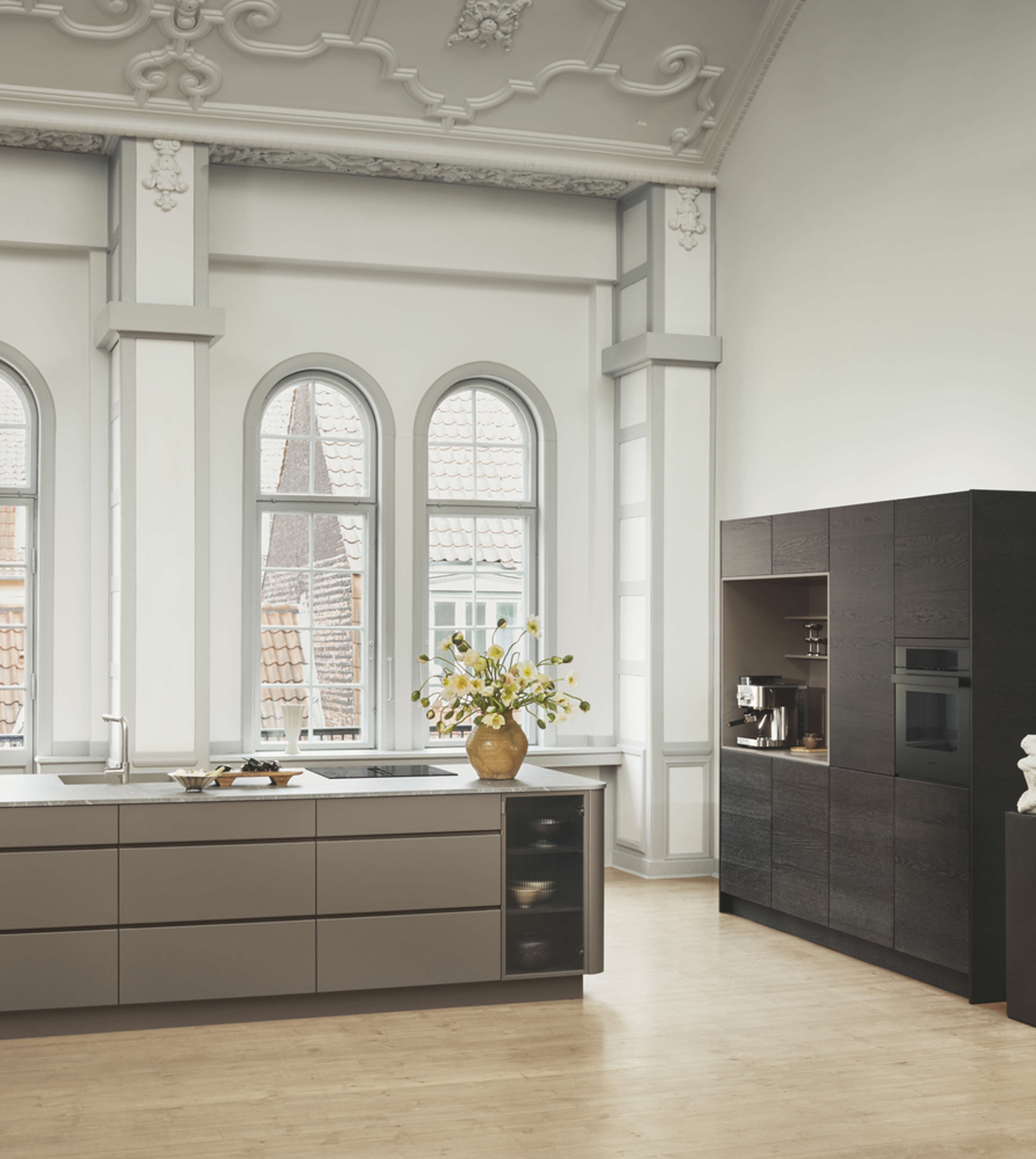
Two new contemporary colours — crema and mocha
Julie: Mano has been through quite the range of colours — from high gloss white to orange Verner Panton-inspired dots to wood tones, dark grey and black-stained wood to today’s popular arizona beige. Today, Mano looks different than it did in 2004.
Not radically. But meaningfully.
New modules.
New features.
New ways to live with it.
And Jens Erik is sure that Mano will keep evolving in the future.
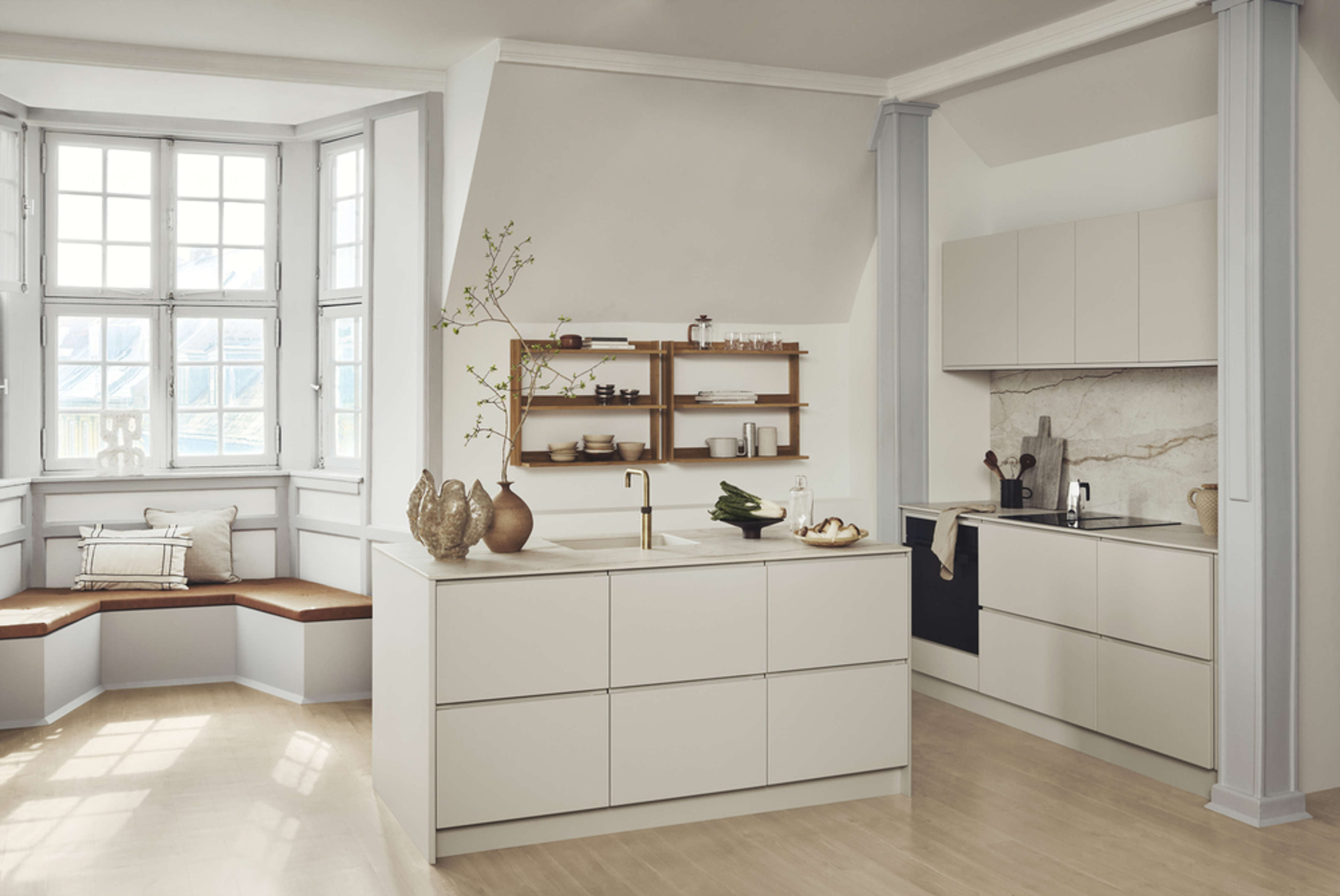
What’s next for Mano? — new colours, inspired by the warm, comforting tones of coffee — crema and mocha.
Crema is a soft, almost-white tone — like the first light in a room in the morning. Like the top layer of a well-made espresso, taking the edge off pure white and replacing it with something calmer, more lived-in. It doesn’t demand attention, but it changes how everything around it feels — lighter, softer, more at ease.
Mocha is deeper, warmer — a rich brown with just enough softness to feel inviting rather than heavy. It’s the colour of coffee in the late afternoon, when the light is lower and everything feels a little more relaxed. It brings depth to a space, but also a sense of comfort — something solid, grounded, and easy to settle into.
As Jens Erik says, “These colours are contemporary… but also long lasting.”
They’re not trend colours.
They’re living colours.
People buy Mano again and again
Julie: In 2004, the charts were full of songs like Yeah! by Usher, and Britney Spears’ Toxic — confident, unmistakably of their moment. Design followed a similar rhythm. Glossy surfaces, bold contrasts, expressive shapes. The kind of ideas that felt new, and exciting, and very now. In that moment.
But time has a way of shifting things.
What once felt modern begins to feel dated.What once stood out begins to blend in.
Most things from that time belong there now.
But Mano didn’t get stuck in the same way.
So what actually makes something last?
As Jens Erik says, “You don’t know before it hits the market…it’s the customers that make it timeless.”
Not designers.Not brands.
People.
Choosing it.
Again and again.
Claus: The most sustainable thing is to make sure a kitchen lasts a long time.
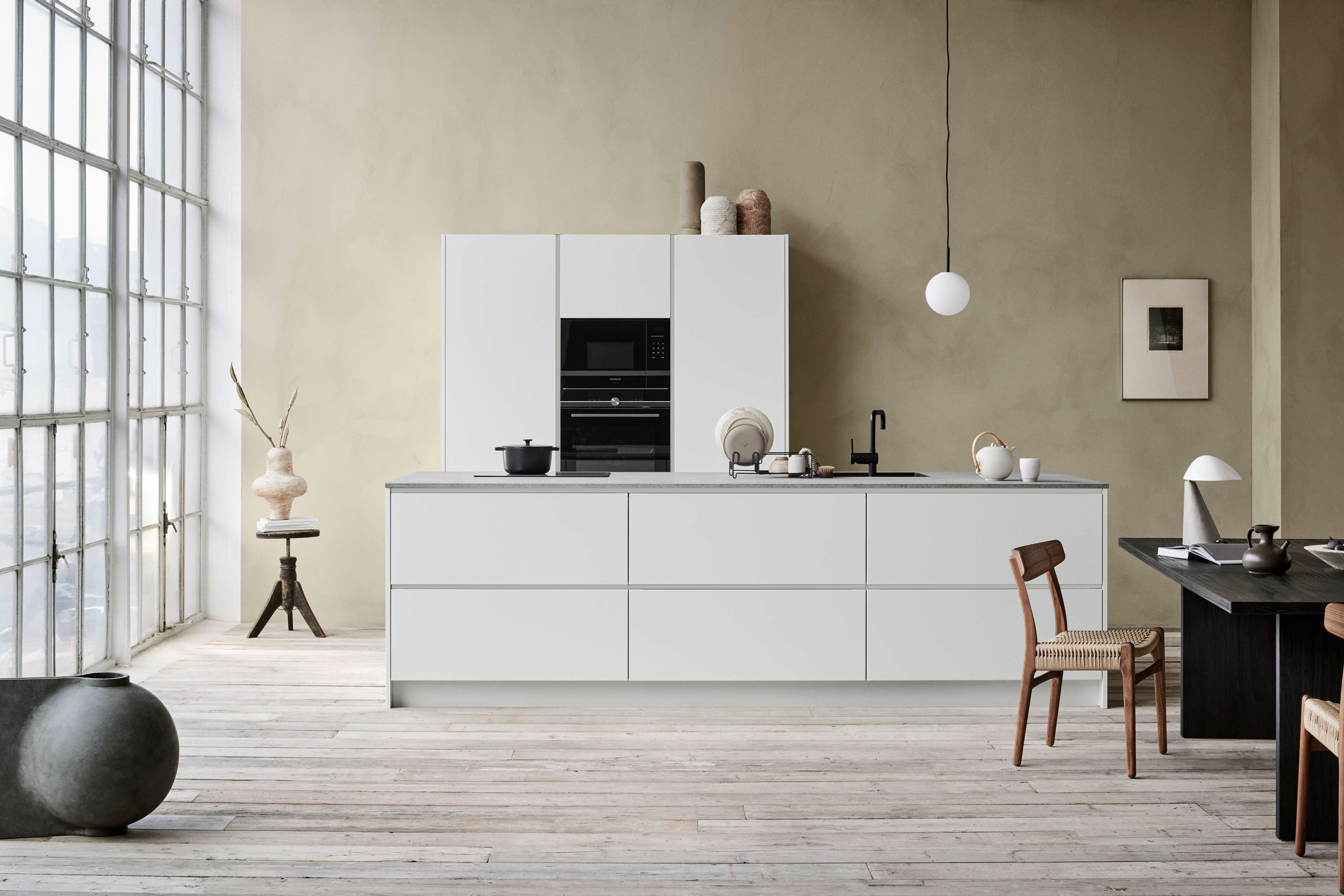
Yes, the Mano kitchen has always been one of the preferred design by our customer. And it's been in our range for more than 20 years. And occasionally we go back to Mano and we refine the small details fix smaller issues, make the surface better, the ergonomics better.
And come with new colours, etc.
And we did that a number of times, meaning that Mano is, I would say, close to perfection. It's really a great looking kitchen, but also functionality-wise it's really good. Mano has that unique possibility of always having the line where you have the handle goes all the way through the design.
It doesn't matter if you have base cabinets, tall cabinets, and you put them next to each other, move your ovens up and down, you can always preserve the lines going through. So then you don't get an interruption in your view when you look at Mano. Another thing with Mano is that the functionality is great — similar to our Ombra design.
You can also you use your underhand hand grip to open the top drawer where you keep things that use the most. And we also have a lot of Mano customers that move to another house and they buy a Mano kitchen again.
It was like the kitchen there was the part of the day every day
Julie: Speaking of people who have had multiple Mano kitchens, one of Kvik’s franchisees, Sandra Lynge, grew up with a Mano kitchen in her home and today she sells them from the Kvik store she runs with her partner in Østerbro, a neighborhood in Copenhagen.
Sandra: Actually when I was a little child, my dad, oh, sorry, my brother, have like a, you know, like a paint the kitchen, our old kitchen.
And my mom heard that it was so quiet in the kitchen and she came out and my little brother has like taken the, um, what was it called? Taking a marker? Yeah, marker. Exactly. In black and paint everywhere. The kitchen was black everywhere.
So we got a white Mano kitchen. That must have been in 2004, I guess, so I have been around 10 years old. And, afterwards, my dad built our summer house in 2006, and then we also got a Kvik kitchen up there — like the Sociable Kitchen®. It was a part of the big living room. We, uh, start the day there and we end the day in the kitchen. Our dad baked every weekend, so it was like the kitchen there was the part of the day every day.
And then my parents broke up like eight years ago and then my dad has a white Mano kitchen in his house today also.
Danish design — good ideas are made to last
Julie: More than twenty years later, Mano is still here.
Not because it shouted the loudest.
But because it got the important things right.
And kept getting them right.
That’s Mano.
And that’s it for this episode of the Sociable Kitchen podcast. Thank you to Claus Johnson for coming into the studio to talk about Mano and to Jens-Erik Nielsen for sharing his deep knowledge of Mano with us. And also thank you to Henrik Gade and Sandra Lynge for sharing their Mano stories.
This episode was produced by me, Julie Broberg and sound engineer Magnus Vad at Feedback Studio near the harbour in sunny Aarhus.